
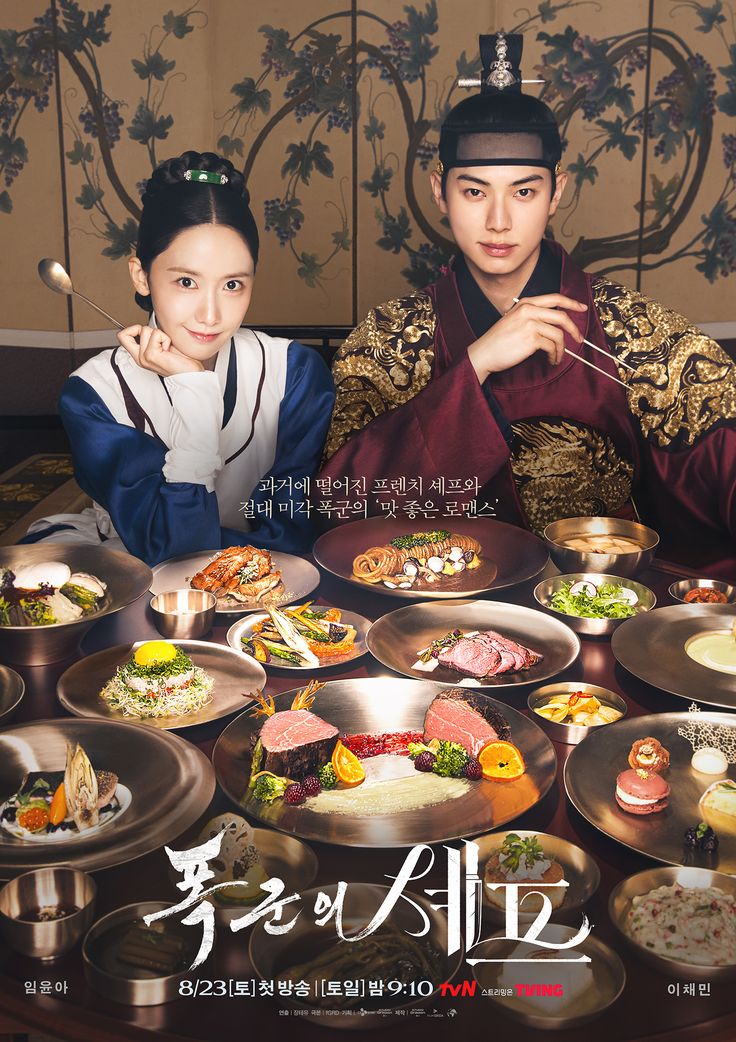
Bon Appetit, Your Majesty Review: A Feast of Food and a Famine of Story
A story where every dish is carefully crafted, but the romance, politics, and villain feel rushed out of the kitchen.
Korean Drama Name: 폭군의 셰프 (The Tyrant’s Chef )
Where To Watch: Netflix ← *Click for direct link*
Average Rating: 8.6/10 (Mydramalist)
My Rating: 7.0/10
One Sentence Description: A feast for food lovers and a frustrating experience for anyone hoping for a deeper story beneath the cooking.
Trailer:
Disclaimer: This review is 100% my opinion — I’m not here to hate, just to share my thoughts! Also, SPOILERS AHEAD, so proceed with caution if you haven’t watched yet. Watch it, come back and let’s see if you agree. Let’s keep the discussion respectful and fun! 💕
Simple Description
Bon Appetit, Your Majesty is about a female chef who gets sent back to the Joseon era during the reign of a tyrant king who seems determined to kill everyone around him. After losing her one ticket back home, she does everything she can to find it. What she doesn’t expect is to not only fall in love with the very king she’s trying to avoid, but to somehow end up with the fate of Joseon constantly landing in her hands… and on her dinner plates.
⚠️Length Note: This post includes a detailed (and long) story breakdown. Want to skip straight to the review? Jump to the Review
The series begins in the Joseon era with a woman named Yeon Ji Young being dragged before King Yi Heon. Surrounded by officials demanding her execution, things aren’t looking good for her. To everyone’s surprise, however, the king refuses to sentence her to death and instead appoints her as the head chef of the royal kitchen.
We are then taken back to how she ended up in such a ridiculous situation.
The story shifts to 2025 where Ji Young is competing in a prestigious French cooking competition. The challenge is to create a royal meal and, long story short, she wins. Not only does she take first place, but she also becomes the new head chef of a Michelin three-star restaurant.
After the competition, she shares the good news with her father who immediately asks her for a favour. A friend of his in Paris has an old book from the Joseon era and he wants Ji Young to bring it back to Korea. She agrees and boards a flight home the following day.
Unfortunately, a passenger spills coffee on her during the flight. While trying to dry herself off in the bathroom, she notices that the book has also gotten wet. As she attempts to save it, she discovers a message written on the back. The writer wishes for his lost lover to return to him. At that exact moment, a solar eclipse occurs. The next thing Ji Young knows, she’s being sucked into a vortex and dropped into the middle of a forest. As if that wasn’t bad enough, she immediately lands in an animal trap and ends up hanging from a tree.
Meanwhile, King Yi Heon is hunting in that very same forest. While aiming at a fox, he accidentally releases Ji Young from the trap instead. Convinced she’s some sort of ghost, he immediately begins chasing her through the woods. When he finally catches her and prepares to strike her down, a rebel suddenly shoots him with an arrow. Both of them tumble off a cliff and into the river below.
When Ji Young wakes up, her first instinct is to help him. She treats his wound and does her best to keep him alive. Yi Heon, on the other hand, wakes up and immediately tries to kill her. In response, Ji Young knocks him unconscious and ties him up. A fair trade, honestly.
Elsewhere, we meet Yi Heon’s junior consort, Kang Mok Ju. Rumours have begun spreading throughout the palace that she is responsible for the king’s increasingly strange behaviour. While wondering where he disappeared to, we’re given a flashback to her past: seven years earlier, Consort Kang Mok Ju was imprisoned for killing a nobleman her mother had sold her to. While in prison, she met Prince Jesan who offered her freedom in exchange for her loyalty. And just like that, we know exactly where her allegiances lie.
Back in the present, Ji Young and Yi Heon bicker their way through the forest until they reach a cluster of abandoned huts. Ji Young insults the king repeatedly, still unaware that he is the king. There, they meet Gil Geum, a girl who once lived in the huts. Ji Young borrows her spare clothes and decides to cook dinner for everyone. Using butter and gochujang she brought from the plane, she makes bibimbap. Yi Heon and Gil Geum find it unbearably spicy at first, but soon fall in love with it.
After dinner, Ji Young and Gil Geum leave Yi Heon behind at the abandoned huts and head back to the cliff where Ji Young lost her bag. Along the way, Ji Young finally pieces together the truth: she’s somehow ended up in the Joseon Dynasty. Meanwhile, Yi Heon’s men locate him and immediately begin searching for the mysterious woman who fed their king bibimbap with butter.
Unfortunately for Ji Young and Gil Geum, they’re found first. A group of guards takes them to Governor Hong’s residence where Ji Young is finally forced to accept that she really has travelled back in time. While there, a group of inspectors arrive and separate the women into two groups. Earlier, we learned about a practice called chaehong. Every year, beautiful women are selected and sent to the king. The inspectors pick out the young and attractive women while everyone else is sent off to work. Ji Young and Gil Geum end up in the working group. Their task? Cook a meal for a group of important guests. At the same time, Yi Heon discovers Ji Young’s scrunchie and realises she’s likely been taken as part of the chaehong selection process.
When the guests finally arrive, they immediately begin complaining about dinner. Apparently, a few slices of meat aren’t enough to impress them. Ji Young encourages them to at least try the food, but they refuse. Confident in her cooking, she makes a reckless bet. If they don’t like the meal, she will forfeit her life. They taste it and love it but lie anyway. Ji Young is dragged away to be punished.
Just before she can receive her punishment, Yi Heon arrives and orders everyone to stop. It’s also at this moment that Ji Young finally realises the man she’s been insulting this entire time is actually the king. Awkward. Wanting an unbiased opinion, Yi Heon decides to try the food himself. He loves it. Ji Young, meanwhile, makes another important discovery: the tyrant king is secretly a massive foodie. Yi Heon decides to bring Ji Young back to the palace after she repeatedly insists that she’s from the future.
While all of this is happening, we also learn that the chaehong system was originally created because Yi Heon wanted revenge for what happened to his mother. After the king proves that Ji Young won her cooking bet fairly, the governor reluctantly allows both women to leave. The trio heads to the cliff to search for Ji Young’s missing bag. When they finally find it hanging precariously over the edge, Ji Young excitedly prepares to retrieve it. Yi Heon has other plans. He grabs the bag and promptly throws it off the cliff. And just like that, Ji Young’s chances of getting home take a nosedive. The next thing she knows, she and Gil Geum are being dragged back to the palace.
Elsewhere, Junior Consort Kang meets with Prince Je San and the two continue discussing their plans to overthrow the king. When Consort Kang learns that Yi Heon is bringing another woman back to the palace, her curiosity is immediately piqued. Once they arrive, Consort Kang warmly greets Yi Heon while staring absolute daggers at Ji Young. We quickly learn that Consort Kang has long had the king wrapped around her finger and has been causing problems throughout the palace. Meanwhile, Ji Young is still trying to process everything that’s happened when Yi Heon suddenly turns to her and promises that by the time he’s finished with her, she’ll be begging for death.
Later, we meet Gong Gil, a jester who receives a secret order from the king to investigate who tried to assassinate him. Yi Heon eventually orders Ji Young to prepare him a meal and, once again, she completely catches him off guard. He is so impressed by her cooking that he even dismisses Consort Kang while eating—something that has apparently never happened before. Unsurprisingly, Consort Kang takes this personally and becomes even more determined to get rid of Ji Young. After several failed attempts to sabotage her, she visits the Dowager Queen and convinces her that Ji Young is becoming a threat to the king. The Dowager Queen decides to settle the matter with a cooking competition. If Ji Young loses, she loses an arm.
Elsewhere, Yi Heon meets with Gong Gil, who delivers a note claiming to possess the “first draft.” Believing this could finally lead him to the truth behind his mother’s death, Yi Heon immediately takes interest. However, his attention is quickly pulled elsewhere when he learns that his grandmother has organised the competition. He storms into the event and announces that if Ji Young is risking an arm, then the other two chefs should be held to the same standard. If they lose, they lose an arm too. Fair is fair.
The competition begins with the Dowager Queen revealing the theme: filial piety. The key ingredients are tofu and soybean paste. At first, Ji Young decides to recreate a pasta dish her father used to make for her. Unfortunately, Chef Eom and Chef Maeng leave her with almost no ingredients to work with. Just when it seems impossible, Eunuch Yoon secretly helps her by providing some lower-quality soybean paste. During their conversation, he mentions that the Dowager Queen’s final meal before entering the palace was doenjang soup and that no one has ever been able to recreate its flavour. Inspired by this, Ji Young completely changes her plan.
Realising the competition isn’t about technical skill but emotional connection, she decides to make a soup instead. As she experiments, she figures out the missing ingredient that could finally recreate the taste the Dowager Queen remembers. She sends Gil Geum to retrieve it. When the competition concludes, Chef Maeng presents fish-wrapped dumplings while Chef Eom serves tofu yeonpotang. Then comes Ji Young. The moment the Dowager Queen tastes her soup, she bursts into tears. The secret ingredient was clams.
More importantly, the dish tastes exactly like the soup she ate before entering the palace all those years ago. Ji Young wins the competition immediately. Unfortunately, that also means the other two chefs are supposed to lose their arms. After a great deal of pleading from everyone involved, Yi Heon eventually agrees to spare them.
Back in her chambers, the Dowager Queen reveals a shocking truth: Yi Heon’s mother was poisoned before being discarded. At the same time, Ji Young finally earns the respect of the royal chefs. Later, when Yi Heon begins suffering through another one of his episodes, Ji Young decides to comfort him the only way she knows how. She makes him a bowl of doenjang pasta. The meal works surprisingly well and gives the two a rare moment of honesty. Ji Young once again explains that she is from the future and that the cookbook inside her lost bag is the only way she can return home. Curious, Yi Heon asks about his future. Ji Young hesitates. She knows exactly how his story ends.
In the future, Yi Heon carries out the Gapshin Literati Purge, executing those responsible for his mother’s death. The purge eventually sparks a revolt, and Yi Heon himself is killed. After Ji Young leaves, Yi Heon sits alone and writes about her dish in a book. Remembering that she called her cookbook the Mangunrok, he decides to give his own book the same title. As he writes the name onto the page, something strange happens. Elsewhere, Ji Young’s bag sits inside a cabinet. The original copy of the Mangunrok slowly begins to disappear.
Later, Ji Young and Gil Geum bump into each other and chat about Gil Geum. During their conversation, we learn more about the attack that nearly prevented Gil Geum from returning during the cooking competition. Consort Kang’s servant had planned to stab her with a hairpin, ensuring she would never make it back in time. The conversation triggers a painful memory for Gong Gil. In a flashback, we learn that his sister once served under Consort Kang. She was later found dead with a similar hairpin clutched in her hand. The pieces begin to connect.
Around the same time, news arrives that an envoy from Ming will soon be visiting Joseon. Determined to remove her rival, Consort Kang secretly gives Chef Maeng arsenic and orders him to get rid of Ji Young. Meanwhile, she prepares a special meal to win back the king’s favour.
Soon after, the king’s annual physical examination arrives. Consort Kang takes the opportunity to prepare the royal meal herself and sends her chosen recipe to the kitchen. Ji Young, however, decides she has a better idea. Instead of following the instructions, she makes fried pork cutlets. The gamble pays off spectacularly. When the meal is served, both Yi Heon and Prince Je San eagerly devour Ji Young’s dish while Consort Kang’s carefully prepared food sits largely untouched. Needless to say, she is not pleased.
That evening, Yi Heon continues documenting Ji Young’s recipes in his version of the Mangunrok. Around the same time, he finally manages to recover Ji Young’s missing bag and decides to return it as a gift. Unfortunately, the one thing Ji Young truly cares about is still missing. The Mangunrok is nowhere inside the bag. Even so, Yi Heon promises that once the Ming envoy leaves, he will help her find it.
Meanwhile, the famous Ming chief envoy Yu Kun arrives in Joseon accompanied by three elite chefs who have reportedly defeated every Korean cook they have encountered. Yu Kun quickly makes his presence known by revealing that the Ming emperor wants even more women and additional ginseng tributes from Joseon while offering very little in return. Ji Young soon learns another important detail: Yu Kun hates Korean food. Naturally, her solution is macarons. To everyone’s surprise, the delicate French dessert is a massive success. Even Yu Kun is impressed.
Rather than simply accepting the envoy’s demands, Yi Heon proposes a cooking competition between Joseon and Ming. The winner will decide the tribute agreement. Ji Young immediately realises how dangerous this is and desperately tries to stop it. Unfortunately, nobody listens. The stakes are brutally simple. If she competes and loses, she dies. If she refuses to compete, she also dies.
Prince Je San, seeing an opportunity to weaken the king, quietly begins working behind the scenes to ensure Joseon loses. As preparations begin, Yi Heon takes Ji Young to a nearby town so she can grind her chilies into powder. While there, she notices a charm identical to one hanging from the missing Mangunrok. Yi Heon quietly buys it for her.
Eventually, the competition rules are announced.
The first round requires a meat-and-fish dish unlike anything seen before.
The second round revolves around the concepts of “knowing” and “change.”
The final round will focus on ginseng soup.
Yu Kun raises the stakes even further by demanding an additional one hundred women and all of Joseon’s ginseng reserves if Ming wins. In response, Ji Young requests large amounts of sugarcane and flour should Joseon emerge victorious. Both sides agree.
With only five days to prepare, Ji Young immediately begins planning all three rounds at once. For the final challenge, she decides to create something Joseon has never seen before: a pressure cooker.
Ji Young meets up with Yi Heon to find someone capable of building the pressure cooker. Her first choice is Jang Yeong Sil, only to discover that he died long ago. Left with no other option, she decides to seek out his descendant, Jang Chun Saeng. Yi Heon, Gong Gil, and the king’s guard accompany her on the journey.
Back at the palace, officials tell everyone that the king is simply unwell. However, once the truth reaches Prince Je San, he immediately orders his men to kill Ji Young. When the group finally reaches Chun Saeng’s home, things do not go as planned. After expressing his complete dislike for royalty, he promptly throws them out. Refusing to give up, Ji Young falls back on the solution that seems to work on everyone in this drama: food.
She prepares dongnae pajeon (green onion pancakes) and lets the smell do all the hard work. The plan works perfectly. Unable to resist, Chun Saeng comes outside, enjoys the pancakes, and eventually agrees to build the pressure cooker.
A few days later, the pressure cooker is finally complete. Unfortunately, Prince Je San’s assassins choose that exact moment to attack. During the fight, the lid of the pressure cooker is destroyed. Chun Saeng promises to repair it and deliver it to the palace before the final round, then urges everyone to flee. As they escape, Ji Young injures her hand and collapses just as reinforcements arrive. When she wakes up, panic immediately sets in. The competition has already started.
She rushes back to the palace and arrives just before her team is disqualified. The first round finally begins. Ji Young and her team plan to make braised pork ribs while the Ming chefs prepare a diced chicken dish. However, after realising that their chili powder has disappeared, Ji Young quickly changes course and decides to make beef bourguignon instead.
During the competition, she catches the scent of her chili powder coming from the Ming team’s station and immediately becomes suspicious. After a lengthy cooking montage, time is called. Ji Young’s dish is a huge success and impresses everyone at the table. Then comes the Ming chefs’ dish: Kung Pao chicken. Before the scores are revealed, Ji Young is allowed to sample their food. The moment she tastes it, she confirms her suspicions. Her stolen chili powder was used in the dish. The chef responsible immediately exposes Prince Je San’s involvement. Je San quickly claims he had no idea Ji Young needed the ingredient, which is about as believable as it sounds. As a result, one of the Ming chefs admits defeat.
Yu Kun, however, refuses to accept the outcome and insists on calling the round a tie. Still dissatisfied, he pushes for an additional advantage. Yi Heon reluctantly agrees that if all three rounds end in ties, Ming will automatically be declared the winner.
The following day, the second round begins. Ji Young and her team decide to make Peking duck. The teams eventually finish their dishes and the judging begins. Yi Heon gives the Ming chefs an 8 out of 10. Yu Kun responds by giving Ji Young’s dish a 1 out of 10 despite being brought to tears because of it. Realising the scoring is completely biased, Yi Heon comes up with a different solution. He asks the chefs to judge their own dishes instead. Both sides refuse, arguing that they cannot objectively evaluate their own food. And just like that, the second round also ends in a tie.
The next round arrives and Ji Young and her team begin preparing ecological samgyetang, a chicken stuffed with ginseng served in a rich broth. Unfortunately, the entire dish relies on the pressure cooker and Chun Saeng is nowhere to be found. Just as Ji Young is ready to abandon the plan and move on to a backup dish, Chun Saeng arrives at the last second on a makeshift airplane.
Meanwhile, the Ming chefs prepare Buldojang. The round comes to an end and everyone finally gets to taste the dishes. For this final round, the chefs are responsible for scoring each other’s food. Ji Young and her team give the Ming chefs 27 points while the Ming chefs award Joseon 28 points. They win. Yu Kun reluctantly admits defeat but immediately tries to negotiate, offering to drop all of his demands in exchange for Ji Young herself. Before anyone can process what he just said, Yi Heon headbutts him. The situation escalates quickly as soldiers from both sides prepare for a fight.
Thankfully, Dowager Queen In Ju enters the room with tea to spill and enough authority to stop the chaos. The Queen reveals a letter from her aunt, who happens to be the second wife of the Ming Emperor. The letter exposes Yu Kun’s entire scheme. The emperor never made the outrageous demands Yu Kun claimed he did. He had been acting on his own the entire time. Faced with the truth, Yu Kun immediately begs for mercy before making a very quick exit.
After the envoy leaves, the Queen asks Ji Young to prepare a meal for the young Grand Prince. Unfortunately, Consort Kang sees this as the perfect opportunity. She and Prince Je San hatch a plan to poison the dish and frame Ji Young for the crime. The following day, the young prince shares the meal with Yi Heon and everything seems fine at first. Then disaster strikes.
The prince suddenly begins inching toward death and Ji Young is immediately arrested, dragged away, and tortured for poisoning him. When Yi Heon learns what happened, he storms in and demands her release. However, the prince’s mother refuses to back down. Ji Young is forced to calm Yi Heon down before he starts executing people and instead asks him to prove her innocence.
He warns the Queen not to lay another hand on Ji Young and immediately begins searching for answers. Yi Heon first speaks with the royal physicians, who confirm that nothing was wrong with the ingredients Ji Young used. He then searches the prince’s chambers and discovers several medicine packets. Suspicious, he orders them to be investigated.
Meanwhile, Queen In Ju secretly takes the prison keys and releases Ji Young herself. However, her generosity comes with conditions. If Ji Young fails to uncover the truth within three days, her death will be far from merciful. Once free, Ji Young immediately finds Yi Heon. Before they can continue their investigation, Yi Heon kisses her and finally admits that he likes her. The two begin working together to solve the mystery. Shortly afterward, Gil Geum smells them and notices that they smell suspiciously like rat droppings.
When Ji Young later describes the scent to the royal physician, he finally pieces everything together. One of the prince’s medicines contains a medicinal ingredient made from squirrel droppings. Normally it’s harmless, but when combined with ginseng—the very ingredient the prince ate during dinner—it becomes poisonous.
With the cause finally identified, the physician quickly prepares an antidote. Unfortunately, the prince’s condition has worsened and his stomach is now too weak to properly absorb the medicine. Ji Young immediately jumps into action and prepares a nourishing meal to help strengthen him. Thankfully, it works. The prince begins to recover.
Yi Heon’s grandmother’s birthday approaches and the king decides to perform a dance for her, just like he used to when he was a child. While showing Ji Young some of his moves, Prince Je San sets the next stage of his plan into motion. He visits Yi Heon’s maternal grandmother, who has long since lost her sanity following her daughter’s death. In her possession is a doll wrapped in the bloodstained cloth that belonged to Yi Heon’s mother. Prince Je San plans to use both the grandmother and the cloth to trigger Yi Heon’s trauma, push him into a violent outburst, and finally give everyone a reason to remove him from power.
The following day, Ji Young prepares a vegan meal made with soy meat for the Dowager Queen and her companions. The meal is a huge success and before long, it’s finally time for Yi Heon’s birthday performance. Meanwhile, Prince Je San’s trap begins to close.
A royal drafter arrives and informs Yi Heon that historical records from the day of his mother’s death have finally been recovered. The moment Ji Young hears this, she immediately realises what’s happening. These are the very events that led to the Gapshin Literati Purge in the future. The records are read aloud.
They reveal that nearly everyone around Yi Heon was involved in his mother’s downfall. Even Dowager Queen In Ju supported her banishment. Worse still, the records reveal that it was Queen In Ju herself who ultimately requested that Yi Heon’s mother be poisoned. As if that weren’t enough, Yi Heon’s maternal grandmother appears carrying the bloodstained belongings of her daughter. Through her grief-stricken memories, Yi Heon is forced to relive everything all over again. It’s enough to break him.
Enraged, Yi Heon declares that everyone involved will die. As he moves to carry out his revenge, Ji Young physically steps in front of him and desperately tries to calm him down. She reminds him of the promises he made, the future he’s trying to avoid, and the love he claims to have for her. Unfortunately, none of it works. Yi Heon refuses to listen and remains determined to execute everyone responsible. Then Ji Young remembers the chocolates she had originally planned to give him. Instead, she gives them to his grandmother.
For a brief moment, the old woman regains clarity and is finally able to share her daughter’s final words. She tells Yi Heon that his mother never wanted revenge. She wanted him to right the injustice by becoming a wise and virtuous king. This finally reaches him. The rage begins to fade and Yi Heon lowers his sword.
Having failed to push Yi Heon over the edge, Prince Je San immediately moves to his backup plan. This time, he launches a full rebellion. The plan is simple: lure Yi Heon to Salgoji Forest and kill him there. His men first attempt to kidnap Ji Young, but Gong Gil arrives just in time to save her. Despite this setback, another soldier delivers a message claiming that both Ji Young and one of the king’s friends have been captured and taken to the forest. Without hesitation, Yi Heon rushes to save them.
The moment he leaves the palace, Prince Je San’s forces put the rebellion into motion. Disguised as royal guards, they begin slaughtering palace staff and spreading chaos throughout the capital. As the violence unfolds, Prince Je San personally murders Queen In Ju and immediately starts spreading rumors that the king is responsible.
The rebellion continues while Yi Heon races toward the forest. As expected, Prince Je San’s men are waiting for him. A large group of soldiers ambushes Yi Heon and eventually catches up to Gong Gil, Ji Young, and the others as well. Things quickly go from bad to worse and for a moment it looks like nobody is making it out alive. Thankfully, Gong Gil’s fellow jesters arrive and help turn the tide. The distraction gives everyone just enough time to escape. Meanwhile, back at the palace, Prince Je San continues eliminating anyone who might stand in his way. After securing control of the court, he forces the other queen to prepare the young prince to be crowned king the following morning. Despite everything, Yi Heon survives the battle.
The next day arrives and the little prince is officially crowned. Just as the ceremony is underway, a battered and bloodied Yi Heon appears before the court. He requests an audience with Prince Je San and reveals that he already knew Je San was planning something. Unfortunately, knowing about the betrayal and stopping it are two very different things.
Yi Heon is imprisoned and locked away with his version of the Mangunrok. While awaiting his fate, he finishes writing the book and adds the final inscription on the last page—the very same inscription Ji Young read at the beginning of the story. Later, Gong Gil secretly delivers Ji Young’s butterfly charm to Yi Heon, reassuring him that she is still alive. Then Gong Gil, knowing that Consort Kang caused the death of his sister, kills her.
Prince Je San publicly announces that Yi Heon will be exiled, but privately decides that letting him live is far too dangerous. Instead, he orders Yi Heon to be killed on the journey out. Ji Young learns of the plan and rushes to warn him. Once the guards escort Yi Heon to the location where they intend to execute him, reinforcements suddenly arrive and a massive fight breaks out. In the chaos, Yi Heon’s supporters manage to gain the upper hand. By the end of the battle, Yi Heon’s side is victorious. However, Ji Young is knocked unconscious and kidnapped by Prince Je San’s remaining men.
With no time to celebrate, Yi Heon and his allies return to the palace and begin taking back control. Eventually, Yi Heon comes face-to-face with Prince Je San. Nearby, Ji Young is being held captive. Je San orders three guards to attack Yi Heon at once. While Yi Heon fights them off, Ji Young manages to cut herself free and rush to his side. During the struggle, she spots the Mangunrok and finally realises the truth. Yi Heon was the original author all along.
The realisation distracts them for just a moment. It’s enough. Prince Je San raises his sword and charges at Yi Heon. Without hesitation, Ji Young throws herself in front of him. She takes the blow. Prince Je San is quickly subdued, but the damage has already been done. As Ji Young lies dying, she admits that she never truly wanted to leave. Despite all her attempts to return home, she had fallen completely in love with Yi Heon.
Then something impossible happens. The Mangunrok begins to glow. The book lifts Ji Young into the air and, moments later, both she and the book disappear. Yi Heon can only watch. Heartbroken, he breaks down before finally killing Prince Je San once and for all.
Ji Young eventually wakes up in a hospital in modern-day Seoul. At first, she’s simply relieved to be alive. Then reality settles in. She’s back home. And Yi Heon is gone. Unable to move on, Ji Young spends her days researching King Yi Heon. To her surprise, she discovers that history no longer records his death. Instead, the records claim that he mysteriously disappeared. A month later, Ji Young agrees to help out at a friend’s restaurant for a while. As she settles into her new routine, she begins noticing something strange. The staff all look exactly like the people she knew in Joseon. One day she gets into an argument with a customer who also bears an uncanny resemblance to someone from the past. She turns around and comes face-to-face with Yi Heon.
The story reaches its conclusion with Yi Heon fulfilling the promise he made long ago: finding his way back to her. The two finally reunite and share a kiss. In the epilogue, Yi Heon keeps one final promise and cooks bibimbap for Ji Young himself.
The End.

The Review
The Good
The Food Was the Real Main Character
I think we can all agree that the biggest carrying factor of this show was the food. Every dish looked incredible and the cooking montages were filmed so well that I genuinely found myself wishing I had my own copy of the Mangunrok so I could time travel and try everything. Whether it was the preparation, the ingredients, or the final presentation, the show knew exactly how to make every meal feel special.
The reactions helped too. Watching Yi Heon and everyone around him completely lose their minds over Ji Young’s cooking never got old. It added a lot of comedy and charm to scenes that could have otherwise just been people eating. Honestly, it makes sense that the drama leaned so heavily into the cooking aspect because it was easily one of its strongest elements. The director showed up ready to cook and thankfully remembered to feed the audience too.
Written by a Lover King
Even though I figured out fairly early on that Yi Heon was the one who wrote the Mangunrok, it didn’t stop me from loving the reveal. I thought it was such a creative touch to make him the book’s original author and reveal that all of the recipes were inspired by meals Ji Young cooked for him. More importantly, the drama didn’t forget about the book after introducing it. We constantly saw Yi Heon updating it throughout the story, adding new dishes and memories as his feelings for Ji Young grew.
What could have easily been a simple time-travel device became one of the most romantic parts of the entire show. The Mangunrok wasn’t just a cookbook anymore, it was a record of his love for her. By the time we reached the ending, the book felt less like a magical artifact and more like a love letter written across time.

The Bad
A Cooking Show Wearing a Historical Drama Costume
Even though I praised the cooking (and still do), it genuinely felt like the writers cared about nothing else. The historical setting wasn’t a plot, it was a backdrop. A cute little stage prop. A decorative plate under Ji Young’s dishes. The entire premise is that she gets trapped in the Joseon era and has to figure out how to survive, but that storyline gets swept aside almost immediately so she can keep cooking and Yi Heon can keep eating.
The historical plot was so lazily handled that whenever the actual story tried to take centre stage, it became boring. Prince Je San would show up with his “serious” political tension, and I’d find myself waiting for the next cooking montage. Which is wild, because Ji Young literally time‑traveled to change history and somehow the history part was the least interesting thing happening.
This Show Was Too Unbelievable
I’m going to try to explain this without sounding contradictory because, yes, I know this is a time-travel drama. Obviously it’s unrealistic. That’s not what I mean. My issue was that even within its own world, the story constantly asked me to believe things that didn’t feel earned.
Every major problem somehow ended up in Ji Young’s hands. Political disputes? Ji Young. International relations? Ji Young. Royal family conflicts? Ji Young. The future of Joseon? Apparently Ji Young. At some point, it stopped feeling like she was trapped in a dangerous historical period and started feeling like the entire kingdom was incapable of functioning without her and her dishes. Then there’s the fact that she almost never loses.
Consort Kang spends most of the drama plotting against her, yet rarely scores a meaningful victory. Every obstacle exists just long enough to create tension before Ji Young overcomes it. And whenever something bad does happen to her, it usually feels less like a consequence and more like an excuse to give Yi Heon another dramatic moment.
The drama keeps telling us how dangerous the palace is, but it never really lets Ji Young suffer a major defeat. Then we have the political side of things. The show constantly implies that nobody likes Yi Heon. Half the nobles seem to be secretly working with Prince Je San, conspiracies are happening everywhere, assassination attempts are common, and people are openly questioning the king’s rule.
So how was Yi Heon completely unaware of almost everything? It honestly felt like he was living in his own little bubble while the rest of the kingdom was following Prince Je San. What made it even harder to believe was the fact that Prince Je San ultimately lost.
What Villain Arc?
Speaking of Je San, his entire approach to overthrowing the king felt like it was written on the back of a napkin five minutes before filming. His supposed master plan was to use the truth about Yi Heon’s mother to push the king into becoming the tyrant history remembered him as, yet he spends most of the drama doing very little. Instead of feeling like a calculated mastermind working toward a long-term goal, he often felt like a character who only made plans when the plot conveniently handed him an opportunity.
Then comes the extremely rushed ending that gave him victory for all of five minutes before plot convenience says no more. The political side of the story was so underdeveloped that despite them slowly leading up to it all series long, it seemed to come out of nowhere. One minute everyone is relieved to not be killed, the next they’re all dead.
Then there’s his relation to Yi Heon. Even by the end of the drama, I wasn’t entirely sure who he was supposed to be in relation to Yi Heon. An uncle? A distant royal relative? As I always say, I’m not interested in digging through vague implications to build a character’s background myself. If a simple conversation or flashback could have clarified it, then the writers should have included it.
The Romance Problem
And then there’s Ji Young. This is where I can’t tell whether it was the directing or the performance, but she often felt far less invested in the relationship than Yi Heon did. Again, this isn’t hate toward the actress. It simply felt like the drama never convinced me that Ji Young was as in love with him as he was with her. When she worried about him finding the Mangunrok, it felt less like “I don’t want to leave the man I love” and more like “I don’t want to leave my job.” The emotional weight never quite landed.
Not only that, but she had absolutely no reason to love him. Even if we ignore the smaller things he did to her, she still knew exactly what kind of man he was in history. He was a tyrant, a womaniser, and widely considered unstable. That doesn’t magically get swept under the rug because he enjoys her cooking. It was genuinely hard to believe in their love, and Ji Young’s side of the romance made it even harder. What exactly was she attracted to? Trauma can help us understand someone’s behaviour, but it doesn’t justify it and it definitely doesn’t make someone dateable. What’s appealing about a king who potentially takes 100 women at a time for himself?
By the time Ji Young finally confessed her feelings, it felt less like the natural conclusion of a romance and more like the script reminding us that this was supposed to be a love story. Some dramas rely on “the leads must date” as the entire foundation of the romance instead of actually building a believable emotional connection. And that’s exactly what happened here.
Unbelievable Love
You guys know I value honesty, right?
I may get some hate for this, but I need to say it because it sets up not only this point, but several others later on.
Please still love me after this.
I love K-dramas as much as the next person, but one of the biggest weaknesses I keep running into is how often romances struggle to actually sell that the couple is in love. There! I said it. I feel free now. I don’t know why, but sometimes it feels almost impossible for two actors to convincingly portray romantic chemistry. I only started noticing this after getting into Chinese dramas. They know how to sell that. While watching this, I was also watching Pursuit of Jade, and the difference in chemistry between the two couples felt massive. When I don’t believe the romance, the entire story starts to wobble.
Take this drama. I didn’t feel even the slightest spark between Ji Young and Yi Heon. It was hard to believe Yi Heon wrote a whole cookbook for her, risked his kingdom, and did who‑knows‑what to time travel when their relationship barely felt connected. Their bond was basically:
- She likes to cook.
- He likes to eat.
That’s it.
Even the way the story forced them together was lazy. She drags him around, insults him, and as punishment he… makes her his chef? A job she loves? He threatens to make her “beg for death” and then immediately gives her a high‑ranking position and unlimited kitchen access. Somewhere along the way, we definitely lost the plot.
The fact that he was willing to abandon his lifelong mission, risk everything, and eventually devote his entire existence to finding her again should have felt romantic. Instead, it felt hollow because the foundation wasn’t there. I’ll get into this more in my What I Would Do section, but the relationship needed more substance before asking me to believe the lengths Yi Heon went to for her.
Yi Heon, The Tyrant?
Another thing that made Yi Heon difficult to buy into was how inconsistent the drama was about his reputation. The show repeatedly tells us that he’s unstable, dangerous, and on the path toward becoming a tyrant, yet we rarely get to see that side of him in action.
Since I already mentioned Pursuit of Jade, I might as well bring it up again. One thing I appreciated about that drama—and a lot of historical C-dramas in general—is that if a character is feared, the audience actually sees why. The male lead isn’t just known for being ruthless; we watch him make ruthless decisions. People fear him because he’s earned that reputation on-screen. With the ML in POJ, he openly kills, intimidates, and commands fear, and the audience understands exactly why people tremble around him.
With Yi Heon, it often felt like the opposite. Characters constantly talked about how terrifying he was, but outside of a few threats and moments of anger, we rarely saw the level of cruelty, instability, or obsession that the story kept insisting was there. If he’s supposed to be a king whose first instinct is violence, then show me that. Let him make harsher decisions. Let him cross lines. Let me understand why the people around him are so afraid.
Instead, it felt like he was dangerous because the script said he was rather than because his actions consistently supported it. And that hurts the romance too. If this is a romance, then Ji Young should’ve been the only person who could calm him down or see the softer side of him — the way POJ handles it. But here, the drama never commits to either direction, leaving his characterisation feeling hollow and inconsistent.
Then there’s the womaniser angle. How was that even possible? Aside from the drama verbally telling us he was obsessed with women, he never acted like it. How does a supposedly woman‑obsessed king suddenly turn into a shy, gentle, flustered man around a chef he initially thought was unhinged? I thought we were getting an enemies‑to‑lovers arc, but we got nothing.
As it stands, Yi Heon often felt caught between two different versions of the same character: the terrifying tyrant everyone talked about and the surprisingly reasonable man we actually spent most of our time watching. The drama never fully committed to either version, and because of that, neither one felt completely believable.
Why Did Yi Heon’s Mother Die?
Then we reach the biggest mystery in the drama: Yi Heon’s mother. When the truth finally comes out, we’re told that nearly everyone was involved in her downfall. The Dowager Queen. Court officials. The people around the palace. Yet even after the reveal, I still wasn’t entirely sure why everyone hated her so much in the first place.
What exactly did she do that warranted such extreme punishment? Why was she considered such a threat? And if the people around her hated her enough to poison and dispose of her, why was her son allowed to survive and eventually become king? Didn’t they expect him to want revenge— like he did?
These questions are technically answered with broad explanations, but never with enough depth to feel satisfying. The drama treats her death as the emotional core of Yi Heon’s entire story, yet never develops the circumstances around it enough for the reveal to truly hit.
What makes this frustrating is that there was actually a compelling political storyline buried underneath all the cooking. A king haunted by his mother’s death. A royal family full of secrets. A prince plotting rebellion from the shadows. Those are strong ingredients for a great historical drama. The problem is that the show never gives those ideas the same attention it gives a bowl of soup.
What Was Up With the 100 Girls?
Speaking of Yi Heon’s mother, we find out pretty early on that the king is infamous for taking 100 women every year (or every few years—I honestly forgot) because he’s “woman-obsessed”. Naturally, this is presented as one of the reasons people view him as a tyrant. Then later, we’re told he was actually doing it because of what happened to his mother.
And that’s where I got lost. What do the 100 girls have to do with his mother’s death? Why is this the solution? Then the drama hints that the women are actually being sent to Ming as part of some arrangement involving the emperor, but that isn’t fully explained either. So by the end, I still wasn’t entirely sure what the chaehong system was accomplishing or why Yi Heon was so committed to it. I read a few comments of people saying that he was a womanizer and the 100 women were for him. But then you see how nervous and soft he was to Ji Young, and that falls flat. So, I don’t really think anyone knew what was going on with that.
Once again, the drama introduces something that sounds interesting, then leaves it half-developed because it’s more interested in showing us another cooking scene. Usually, when a drama gives its male lead morally questionable actions, there’s a moment where he explains himself. Maybe the audience doesn’t agree with him, but at least we understand his reasoning. Here, that never really happens. The fact that Yi Heon is regularly taking 100 women and being a tyrant is just left hanging in the air, and I guess we’re supposed to overlook it because he’s a tragic king who misses his mother.
Who Was Yi Heon to the People?
Which leads into another issue: who exactly was Yi Heon to the people of Joseon?
Historically, he’s remembered as the king who carried out the purge and was eventually killed because of it. The drama constantly reminds us that he’s supposed to become a tyrant, but we rarely get to see how the public actually viewed him. If he was truly going around taking 100 women at a time, why wasn’t Prince Je San using that to rally support against him? Why wasn’t there more public resentment? The drama tells us Yi Heon is feared, but it rarely shows us why.
His entire character is built around his obsession with avenging his mother, yet when the moment finally comes, he’s talked down surprisingly easily. Ji Young gives him a speech about love and the promise he made to her, and suddenly the man who’s spent years preparing for revenge changes course. Then there’s the scene with his maternal grandmother. Somehow, he immediately believes she has regained her senses long enough to deliver his mother’s final message, and that alone is enough to stop him. It all felt a little too convenient.
Also, I read a few comments claiming that Yi Heon was loosely inspired by a real-life king who committed all sorts of horrific acts and… whose idea was that? If that’s true, it’s a really strange creative choice. When you’re borrowing from a real historical figure known for causing genuine suffering, turning them into the male lead of a romance-comedy feels a little insensitive. Historical fiction can absolutely reimagine people and events, but I think there’s a difference between reimagining history and romanticising it.
The drama already struggles to explain why Yi Heon does half the things he does, so if he’s meant to be inspired by a king who was genuinely infamous, it only makes the disconnect more noticeable. The show wants us to sympathise with him, root for his romance, and celebrate his happy ending, but history doesn’t get a happy ending. The people affected by those real events certainly didn’t. It’s such an odd choice to build such a lighthearted romance around someone who may have been based on a figure remembered for the exact opposite. (if true)
He Didn’t Seem That Into Consort Kang
This isn’t a major complaint, but it did leave me scratching my head. For a man who was supposedly wrapped around Consort Kang’s finger, he sure managed to unwrap himself pretty quickly. The drama repeatedly tells us that Kang used his feelings for her to manipulate him into making terrible decisions. Ji Young even explains that much of his reputation as a tyrant came from Kang’s influence over him. Yet the moment Ji Young enters the picture, Consort Kang almost feels like yesterday’s news. I would’ve liked to see that transition happen more gradually. Show Yi Heon recognising the manipulation. Show him struggling to separate genuine affection from toxic attachment. Show Ji Young helping him understand that love isn’t supposed to be built on fear, control, and emotional games.
Instead, it feels like he simply swaps one woman for another and moves on. It’s not a huge issue, but it feels like another example of the drama introducing an interesting idea and then rushing past it before fully exploring it.
How Did He Time Travel?
The fact that the drama completely brushes past Yi Heon’s ability to time travel is so ridiculous that it’s funny. It’s like the writers reached the finale and collectively decided: “Here’s your happy ending. Just shut up and take it.” Because the second you think about it, absolutely none of it makes sense. Ji Young had the Mangunrok. The book was established from the beginning as the reason she traveled through time. The story spent twelve episodes connecting the book to the time-travel mechanics.
If Ji Young needed the book to travel, what did Yi Heon have? A wish? A prayer? A coupon? The power of true love? The drama never even attempts an explanation. And that’s what frustrated me most. Not because I needed a scientific answer, but because the story spent so much time establishing rules only to ignore them when it wanted a happy ending.
Some stories are beautiful because the characters can’t be together. In another drama (which I won’t name for spoiler reasons), the girl goes back in time, falls in love with a prince, dies in the past and wakes up in the present, leaving her true love behind. What made that ending so powerful was the fact that he couldn’t follow her even though he desperately wanted to. He didn’t magically appear in front of her like, “Shh, don’t ask questions.” That’s what made it beautiful. A happy ending doesn’t need to be forced. Especially not this forced. LOLL.

What I Would Do
The Romance Should Have Been the Story
I feel like the biggest way this drama could’ve improved is if the romance actually delivered on everything it hinted at. Like I mentioned above, I would’ve completely shifted the tone of the series. Instead of a light-hearted romantic comedy with historical elements, I would’ve leaned into a darker romance with moments of warmth and humour sprinkled throughout. The biggest change? Yi Heon would actually be insane.
Not in the watered-down way the drama presents him. Not cartoonishly violent, not “he yelled once so he’s scary,” but genuinely unpredictable. A king people are terrified of. A king who lashes out, makes cruel decisions, and has become consumed by his obsession with avenging his mother. And what softens him — what pulls him back from the edge — is Ji Young’s cooking and his belief that she was sent by his mother. What makes Ji Young different isn’t that she’s magically special because she’s the female lead. It’s that she’s the first person who actually sees the man beneath all the madness.
At first, even Ji Young’s motives would be selfish. She believes the only way to get home is to change history, which means changing Yi Heon. She doesn’t approach him because she’s attracted to him. She approaches him because she sees him as the key to returning to her own time. Then something unexpected happens.
The more time she spends with him, the more she realises that beneath all the stories, all the fear, and all the violence is a lonely man who genuinely has nobody. Consort Kang manipulates him. The court fears him. Prince Je San wants to use him. Everyone around him benefits from him remaining unstable. Ji Young becomes the first person who actually talks to him. Not as a king. Not as a tyrant. Not as a future historical figure. Just as a person. Their connection wouldn’t rely on dramatic declarations or forced kisses.
I get into this later but I’d also make Consort Kang’s role much larger. Rather than simply manipulating him politically, I’d have her actively keeping him unstable. How? By secretly drugging him on behalf of Prince Je San. Then Ji Young accidentally disrupts that cycle.
One day he misses a dose. Maybe it’s because she accidentally feeds him something that counteracts the herb. Maybe it’s because she unknowingly replaces something. Whatever the reason, for the first time in years his mind becomes clear. Naturally, he assumes she’s the reason. That’s when the food becomes more than food. It becomes comfort. It becomes safety. It becomes one of the only things grounding him.
From there, the relationship practically writes itself. Instead of falling in love because the script says they should, they slowly become each other’s safe place. He opens up about his mother, his fears, and his growing uncertainty about whether he’s actually becoming the monster everyone believes him to be. Ji Young opens up about her burnout, the pressure of her career, and why she stopped loving the thing she once loved most: cooking (I get into this below).
The meals stop being competition dishes and start becoming personal. Simple meals. Homemade meals. The kind of food that carries memories. And that’s where the romance grows. Not through dramatic declarations but through quiet moments. Sharing food. Sitting together in silence. Looking forward to seeing each other at the every meal. The small moments that slowly become impossible to live without.
Then when Yi Heon eventually decides to abandon revenge, risk everything for her, and spend time searching for a way back to her, it actually means something because we’ve watched that love grow. And yes, I’m going to say it. The romance needed more tension.
Not necessarily explicit scenes or anything over the top, but these are adults. They should act like adults in love. Too often K-dramas settle for one or two pecks and expect that to carry an entire relationship. Some of the most romantic stories I’ve watched barely show anything physical until the end, yet every scene throughout is overflowing with chemistry because the emotional tension is there (Look at you again, POJ — Seriously, go watch it.). Because if Yi Heon is willing to change his lifelong revenge plan for her, and Ji Young is willing to leave everything she knows behind for him, then I need to believe that love with my whole chest.
Unfortunately, I never did.
Give Ji Young Her Own Emotional Journey
One thing I think the drama missed was the opportunity to let Ji Young and Yi Heon heal each other. Leads connect best when they help each other heal. In the original drama, Ji Young’s life in the present was too perfect. She had no wounds, no struggles, nothing for Yi Heon to understand or relate to. That robbed their relationship of depth.
In my version, Ji Young is still an incredible chef, but she’s completely burnt out. She spent years chasing perfection, winning competitions, and building a career that looked impressive from the outside. Somewhere along the way, cooking stopped being something she loved and became something she was expected to be good at. She forgot why she started. Getting sent to Joseon would force her to rediscover that.
Instead of being impressed by elaborate gourmet dishes, Yi Heon would fall in love with the easy meals. The simple recipes. The comfort food. The dishes she makes without overthinking them.
For the first time in years, somebody would love her food for what it means rather than what it achieves. And through that, Ji Young would slowly remember why she fell in love with cooking in the first place.
At the same time, she’d help Yi Heon find peace with the grief he’s carried since childhood. They would become each other’s safe place. He teaches her how to love cooking again. She teaches him how to live again.
And because both of them are healing something deeper than romance, their relationship would feel earned rather than inevitable.
A Villain Who Isn’t Forgotten
The biggest problem with Prince Je San is that the drama treated him like a major threat without ever allowing him to feel like one. He spent most of the story lurking in the background, making vague plans, and then suddenly became important near the end. By the time his rebellion arrived, everything felt rushed. In my version, Prince Je San would practically be running Joseon from the very beginning.
Because of Yi Heon’s instability, many nobles would already look to Je San for leadership. He’d be respected, trusted, and viewed as the reasonable alternative to an increasingly unpredictable king. On the surface, he’d appear calm and capable. Behind the scenes, however, he’d be orchestrating everything.
Je San wouldn’t just want the throne. He’d be carefully building a case for why the king should lose it. That way, when Ji Young arrives and slowly begins helping Yi Heon regain control of himself, Je San immediately recognises the threat she poses. Suddenly the king is becoming harder to manipulate. Suddenly people are seeing a different side of him. That’s when Ji Young becomes the real target.
Instead of spending the series reacting to events, Je San would actively move the story forward. He and Consort Kang would spend the entire drama trying to remove Ji Young from the equation while simultaneously preparing the public for Yi Heon’s downfall. Most importantly, Je San wouldn’t just be manipulating nobles. He’d be manipulating the people.
His plan wouldn’t rely on five nobles whispering in corners. His plan would be simple: expose Yi Heon during one final violent episode and convince the kingdom that the king is too dangerous to rule. Then comes the birthday celebration. The event that should have changed everything.
In this version, it’s a public event. Je San uses Yi Heon’s maternal grandmother, Ji Young, and the truth about his mother as weapons. He deliberately pushes every emotional trigger he can find until Yi Heon finally snaps. And this time? It works.
Ji Young is kidnapped. The grandmother is screaming for revenge. The king completely loses control and begins killing officials left and right. The people watch in horror as the tyrant they feared becomes real before their eyes. Everything Je San spent years preparing finally comes together. The only thing he didn’t calculate? He dies too.
Ji Young manages to escape captivity, injured and barely conscious. She finds Yi Heon in the middle of the chaos and manages to beggingly whisper for him to stop. She passes out and he’s ready to stop. Only… in the corner of his eye, he sees prince Je San smile.
Only then does Yi Heon understand. Yi Heon kills Je San. Consort Kang kills herself. The palace collapses into chaos. But by that point, it’s already too late. The damage has been done. The people have witnessed exactly what Je San wanted them to witness. Their king covered in blood. Their king consumed by rage. Their king proving every rumour true. It’s messy. It’s tragic. It’s devastating.
And that’s exactly why it works.
A Tragedy, Not a Redemption
One thing I actually liked about the original concept was the idea of a tyrant king. The problem wasn’t that Yi Heon was unstable. The problem was that the drama never committed to why.
In my version, like I mentioned above, he really would be suffering from paranoia, hallucinations, and violent outbursts. The difference is that there would be an explanation. Consort Kang. Because he trusts her more than anyone else, she’s able to secretly drug him for years. The herbs cloud his judgement, fuel his paranoia, and slowly destroy his ability to tell reality from fiction. Every story the kingdom tells about his cruelty would have a grain of truth behind it. Not because he’s inherently evil. Because he’s being manipulated.
Meanwhile, Prince Je San takes advantage of the chaos. Every terrible order. Every unnecessary punishment. Every cruel political decision. The king receives the blame while Je San quietly strengthens his own position. This allows Yi Heon to remain a tragic figure rather than simply becoming a monster.
Because if I’m being honest, I don’t think a genuinely murderous tyrant deserves a grand love story. If Yi Heon were truly responsible for every horrible thing he was accused of, the romance becomes much harder to sell— especially if Ji Young knew the horrors. This version allows him to be feared while still remaining sympathetic.
A Tragic Ending with Meaning
Unlike the drama, I wouldn’t give him a happy ending. When Ji Young returns to the future, the story wouldn’t magically bend itself to reunite them.
A year or so later, the people finally rise up. They demand justice. They demand punishment. They demand the death of the tyrant king they’ve spent years fearing.
The tragedy is that they’re wrong. The audience knows it. Ji Young knows it. But history doesn’t. The lies have already become truth. Yi Heon is sentenced to die anyway. And the most heartbreaking part is that he doesn’t fight it.
Not because he wants to die. Not because he’s given up. But because after losing Ji Young, he’s alone again. The woman who saw the real him is gone. The kingdom hates him. His reputation is ruined. His enemies are dead. There’s nothing left to defend. So he accepts his fate.
History remembers him as a monster. Ji Young remembers him as a man. And that’s where the story ends. Not with a miraculous reunion. Not with unexplained time travel. But with two people separated by history itself.
His final thoughts aren’t about revenge or power. They’re about her. They’re about the only person who ever saw him clearly. And somewhere in his final moments, he promises that if another life exists beyond this one, he’ll find her there; this time, as a better man.
To me, that’s far more beautiful than simply having him appear in modern-day Seoul because the plot wanted a happy ending.
A Better Ending That Doesn’t Insult the Audience
Having Yi Heon travel through time through “the power of love” had all of us rolling our eyes. It was the narrative equivalent of shrugging and saying, “Whatever, here’s your happy ending.” So obviously, that’s gone. In my version, he stays in the past and dies. So what happens to Ji Young?
She returns to the present and eventually learns that Yi Heon died alone, carrying the weight of a reputation he never managed to escape. She discovers that history still remembers him as a tyrant and a monster, while the truth of who he really was dies with him. Nobody knows the man she knew. Nobody knows the sacrifices he made. Nobody knows how hard he tried to change. And that’s what breaks her heart.
But I still love a full-circle ending, so here’s how I’d leave everyone satisfied.
A year later, Ji Young visits a reconstructed Joseon palace with a friend. As she walks through the grounds, memories flood back to her. Every hallway reminds her of a conversation. Every courtyard reminds her of a meal. Every doorway reminds her of someone she lost.
Eventually her friend wanders off, leaving Ji Young sitting alone on a bench. She’s quiet for a while, staring at the scenery before someone sits beside her. Then she sighs, wipes her eyes, and the person asks if she’s okay. She says she is, but admits she’s missing someone. He asks if it was an old love. She freezes.
The voice sounds familiar. Painfully familiar. Slowly, she turns her head. We never see his face. Instead, the camera stays on Ji Young as her expression changes. Shock. Confusion. Recognition. Relief.
Then her eyes begin to fill with tears.
And finally, she smiles.
Cut to black.
The end.
We never see who she saw. We never get confirmation. We’re just left with possibility — the most powerful ending of all.
Make Consort Kang a Tragic Villain
I know I’ve already talked about Consort Kang a lot, but I think she’s the character with the most wasted backstory potential in the entire drama. In my version, she wouldn’t truly belong to Prince Je San or Yi Heon. She’d belong to herself.
Everything she does would be motivated by survival. She grew up learning that beauty was valuable, but only as long as somebody more powerful found it useful. She learned that trust gets women killed and that love is often just another form of control. So she adapts.
Her backstory would be harsh. She’d represent the reality of women in Joseon: limited options, limited freedom, and limited safety. She claws her way to the top because she has no other choice. She’s not someone you excuse, but someone you pity. She manipulates. She lies. She uses people before they can use her. Not because she’s evil for the sake of being evil, but because she genuinely believes it’s the only way to survive.
Her relationship with Yi Heon would be especially tragic because she’d recognise his loneliness and exploit it. She’d know exactly how desperately he wants to be loved and would use that weakness to maintain her influence over him. Not because she enjoys hurting him but because losing her position means losing everything. When Ji Young arrives, Consort Kang immediately recognises the danger. Not because she’s jealous of another woman. But because Ji Young threatens the entire system Kang spent years bleeding for.
Ji Young earns trust naturally. She earns affection naturally. She earns influence naturally. Everything Consort Kang has, she had to claw her way toward. Ji Young becomes the embodiment of everything Consort Kang could never have: genuine affection, effortless talent, and the king’s unmanufactured attention. That’s why she’d hate her. Not out of petty jealousy, but because Ji Young represents a life Kang never had the chance to live.
By the end, she’d be the kind of villain you can’t forgive but can’t fully hate either. The kind of character who makes terrible choices but leaves you wondering if you would’ve survived any differently in her position.
To me, that’s far more interesting than simply making her the evil consort standing in the way of the romance. She’d be a tragic figure — a woman who wanted what only men were allowed to have, and who paid the price for reaching too high. She’d also represent something much bigger: what happens when a woman is forced to survive in a world that was never built for her in the first place.

Final Thoughts
In the end, this drama was nothing but a waste of time. I read a comment that said to watch this with food and on 1.75x speed, and honestly, I 100% agree. There was nothing particularly interesting about the drama outside of the cooking itself. Story-wise, there was so much here. There were so many directions this could’ve gone. I mean, my version is just one of dozens of ways this drama could’ve become something special.
I think the problem lies in the fact that the writers (or directors, or someone in the room) relied way too heavily on the cooking aspect and treated the actual story like an afterthought. It felt like they threw the plot together five minutes before the deadline and hoped the food shots would distract us. And yes, the cooking montages were great, but once I sat down and imagined a version with an actual plot, real character development, and a cohesive tone, I couldn’t help feeling disappointed. This drama had all the ingredients to take our breath away. Not as a romance comedy, but as a dark romance with real emotional weight.
Then we have the fact that Yi Heon may or may not be based on a real historical tyrant, which makes everything worse. Why are we watching a man who may have been responsible for real historical suffering laugh, flirt, enjoy meals, and get a happy ending? It’s tone‑deaf. It’s insensitive. If he really was inspired by someone responsible for horrific things, it adds a layer of discomfort that the drama never seems interested in addressing.
And don’t even get me started on that half‑baked, microwaved ending where Yi Heon timetravels simply because he was “determined enough.” It perfectly sums up the drama as a whole. Instead of earning its emotional payoff, it simply throws one at us and hopes we won’t ask questions. By that point, I wasn’t even surprised. When a drama cares about nothing but the cooking, everything else ends up undercooked.
At this point, if I want to watch beautiful food shots with a historical backdrop, I’ll just put on an actual cooking show, throw on a hanbok filter, and call it a day. At least then I won’t have to watch a perfectly good storyline get tossed out like kitchen scraps.
And that’s a wrap! I think I missed writing reviews so much that I kind of overdid it with this one haha. But I did have a lot to say so… 😊
Exciting news though! I’ll finally be posting reviews once a week again 🥳🥳🥳🥳. I’m quitting my current job so while I’m on the look for a new one, I can focus more of my time in bettering the blog and being more consistent. More exciting news, I’m almost at 1,000 views a month!!
I’m so grateful to be able to write these reviews and I really hope you all enjoy them. I know I have a lot to say and write a lot, but it’s also very freeing writing this blog. I’m so excited to get back into it and have more people to share my thoughts with.
Next week, I’ll be reviewing a prince/princess drama that recently came out. My favourite actress is the FL so I’m excited to finally write a review on a drama with her in it. Unfortunately, the review won’t give it the highest praise.
Anyways, I’m so happy to say, see you next week! 💕


Find Your Next Watch!


Main Cast
Lim Yoon A as Yeon Ji Yeong
Lee Chae Min as Yi Heon
Kang Han Na as Kang Mok Ju
Choi Gwi Hwa as Prince Je San
Seo Yi Sook as Queen Dowager In Ju
Yoon Seo Ah as Seo Gil Geum
Lee Joo Ahn as Gong Gil
Kim Kwang Gyu as Chef Eom
Hong Jin Ki as Chef Maeng
Themes/ Genres
Destiny, choice, and rewriting one’s fate; Healing through food and connection; Power, vulnerability, and trust; Found family and loyalty; Identity and self‑worth; Love as transformation; Tradition vs. modernity; Corruption, justice, and moral courage
Historical romance (fusion sageuk); Romantic comedy; Fantasy / time‑slip; Culinary drama; Light political drama

