
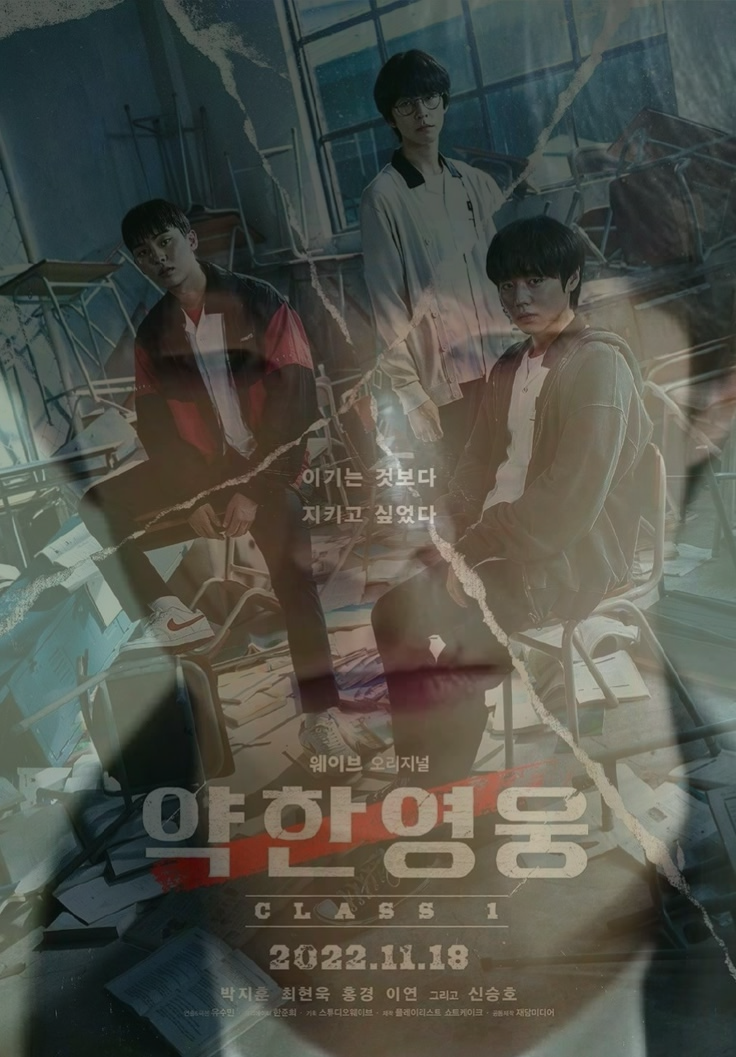
The Tragedy of Oh Beom Seok: A Psychological Breakdown
An exploration of how fear, conditional relationships, and a distorted worldview turned Oh Beom Seok’s greatest chance at happiness into his greatest tragedy.
Introduction: A Life with Conditions
When I first finished Weak Hero Class 1, I had the same reaction most people did. I was angry at Beom Seok. I couldn’t understand how someone could throw away genuine friendships over something as small as an unanswered Instagram follow. His decisions felt irrational, frustrating, and honestly impossible to defend. Like a lot of people, I kept asking myself the same question:
Why?
The obvious answer is trauma. Or bullying. Or abuse. And while all of those play an important role, I don’t think they’re the real story. The deeper issue isn’t simply what happened to Beom Seok. It’s the way those experiences shaped how he understood relationships. Because the more I looked at his actions, the more I realized they all followed the same pattern.
Every important relationship in Beom Seok’s life came with conditions. His father expected obedience. His classmates expected weakness. His second friend group with Lee Jeong Chan and Jeon Yeong Bin (which I’ll be referring to as “Group B”) expected money. Every relationship made sense because everyone wanted something from him.
Then Su Ho and Si Eun came along.
For the first time, Beom Seok found himself in a friendship that didn’t seem to ask for anything in return. They weren’t there because of his money. They weren’t there because they feared him. They weren’t there because they needed something from him. They simply enjoyed being around him. But what if that was the very thing that made the friendship so difficult for him to accept?
The more I thought about it, though, the more I realized that wasn’t really the right question. Instead of asking why he betrayed Su Ho, I started asking why someone like Beom Seok couldn’t accept genuine friendship in the first place. That one question completely changed the way I looked at his character.
This analysis is the result of that thought process.
Once you start looking at his story through a different lens, his downfall stops looking like a series of irrational decisions. Instead, it becomes the tragic story of someone trying to navigate healthy relationships with a mindset shaped entirely by unhealthy ones.
Before we begin, I want to make one thing very clear: I’m not a psychologist, therapist, or mental health professional. Everything you’ll read here is based on my own observations, personal research, and interpretation of the drama. Whenever I use psychological concepts or terminology, I’m using them as tools to better understand Beom Seok’s behavior, not to diagnose him or present any of this as medical fact.
I also want to make something else equally clear. This article isn’t an attempt to excuse or justify what Beom Seok did. Understanding why someone behaves the way they do and excusing their actions are two completely different things. Su Ho almost lost his life. Si Eun was hurt. Innocent people suffered because of Beom Seok’s choices, and nothing in this analysis changes that.
My goal is simply to look beneath the surface of those choices and ask a different question.
What if Beom Seok’s story was never really about betrayal… but about a boy who never learned how to believe someone could care about him without asking for something in return?
Whether you agree with my interpretation or completely disagree, I hope this analysis at least gives you a different way of looking at one of the most tragic characters in Weak Hero Class 1.
*If you would like to read the review on Weak Hero Class 1 as a whole, check out that review here!*

*Table of Contents will be in the bottom right corner (because it’s a lot 🤭)*
Part I — The Foundation: A Boy Built from Fear
I think this part is fairly obvious, but Beom Seok’s downfall doesn’t begin with Su Ho, Yeong Ki, or even that unanswered Instagram follow. It begins long before the events of Weak Hero Class 1. Now, I won’t sit here and invent a childhood we never saw. The drama doesn’t give us enough to do that. But what it does give us is enough to understand the rules Beom Seok grew up believing. And those rules explain almost everything that comes afterward.
The Image He Was Adopted to Serve
Beom Seok’s father doesn’t simply abuse him. He teaches him how relationships work. Every interaction between them reinforces the same message until it becomes the foundation of how Beom Seok sees both himself and the people around him.
The lessons are simple:
- Your value comes from what you provide.
- Affection is conditional.
- Protection comes from power.
- If you become inconvenient, you’ll be discarded.
- Fear keeps people obedient.
- Love isn’t something you receive. It’s something you earn.
The push-up scene is probably the clearest example of this. His father tells him to get down and, without confusion or hesitation, Beom Seok immediately obeys. He doesn’t ask why. He doesn’t hesitate. He already knows what’s coming.
That tells us this wasn’t an isolated punishment. It was routine.
When abuse becomes routine, children stop expecting kindness and start expecting pain. They become hyperaware of disappointment because disappointment always has consequences. Over time, that fear doesn’t stay confined to one relationship. It slowly becomes the lens through which they view every relationship.
By the time the series begins, Beom Seok has already been taught what happens when he fails people, disappoints them, or stops being useful. So when he later begins seeing signs that his friends might be pulling away, his mind doesn’t ask, “Am I overthinking this?” It assumes the worst because that’s exactly what his life has trained him to do.
When Genuine Friendship Doesn’t Make Sense
For most of Beom Seok’s life, relationships followed predictable rules. His father demanded obedience. Bullies preyed on weakness. Everyone wanted something, and as painful as those relationships were, they made sense. He knew what people expected from him, and he knew what he had to do in return.
Then Su Ho and Si Eun came along.
For the first time in his life, people spent time with him simply because they enjoyed his company. They laughed with him. Defended him. Chose to be around him. They weren’t asking for money, status, or anything else in return. But that’s exactly what made the friendship so difficult for Beom Seok to understand.
Throughout the series, he constantly insists on paying for meals or outings, even when Su Ho and Si Eun repeatedly tell him they’ll pay instead. At first glance, it seems like a generous habit. Psychologically, I don’t think that’s what’s happening. I think Beom Seok is trying to make sense of a relationship that doesn’t fit the rules he’s always known.
If he pays, then the friendship has an explanation. He’s contributing something. He’s useful. There’s a reason they’re staying. Without that transaction, everything becomes uncertain. And uncertainty is terrifying for someone who’s spent their entire life believing that relationships only exist because each person is getting something in return.
That’s what makes Su Ho and Si Eun so psychologically important. They aren’t difficult for Beom Seok to trust because they’re bad friends. They’re difficult to trust because they’re good friends.
For the first time, Beom Seok is faced with something he has no framework for understanding: people who genuinely like him without expecting anything back. Instead of feeling safe, that kind of unconditional friendship leaves him completely vulnerable. And when you’ve spent your entire life believing that love has to be earned, vulnerability doesn’t feel comforting. It feels dangerous.
Part II — The Fracture: When Fear Meets Friendship
When we first watched Weak Hero Class 1 (review here!), I think we all had the same reaction: “Seriously? All of this… over that?” An unanswered Instagram follow. A new girl joining the friend group. A few jokes. A couple of awkward moments. Individually, none of those things justify what Beom Seok eventually does. And that’s exactly the point.
This part of the story isn’t about how we interpret those moments. It’s about how Beom Seok interprets them. Once you understand the rules he’s been living by his entire life, those seemingly insignificant moments stop looking like random events. They become the evidence his brain has been waiting for.
1. The Instagram Follow: When Neutrality Feels Like Rejection
I think we all collectively agreed that Beom Seok spiraling over an unanswered Instagram follow was one of the craziest moments in the drama. To us, Su Ho not following him back is… nothing. Maybe he forgot. Maybe he didn’t see it. Maybe he simply doesn’t use Instagram that much.
But Beom Seok doesn’t have the emotional framework to arrive at those conclusions. By this point, his father has already taught him that affection is conditional, approval has to be earned, and being forgotten is the same as being worthless. So when he notices that Su Ho never followed him back but did follow Yeong Ki, it doesn’t feel like an oversight. It feels like confirmation.
“You’re replaceable.”
“You’re not really part of this group.”
“They’ve already found someone better.”
The important thing here isn’t whether those thoughts are true. It’s that they perfectly align with the beliefs he’s carried for years. Once that happens, his brain stops looking for reassurance and starts looking for proof. In other words, he isn’t trying to figure out whether his fears are real anymore. He’s trying to confirm them.
2. Being Called a Lackey: When an Insult Becomes an Identity
We then get the scene where Gil Su angrily calls Beom Seok a lackey after Beom Seok’s father has him arrested. On the surface, it’s just an insult thrown out in anger. Psychologically, it’s much more than that.
Gil Su unknowingly says the one thing Beom Seok has probably feared hearing his entire life. Because being called a lackey isn’t simply being called weak. It’s being told that your friendships aren’t real. That you’re only tolerated because you’re useful. That people don’t actually like you; they simply keep you around because they benefit from you.
Whether Gil Su believed any of that doesn’t really matter. What matters is that Beom Seok already did. That’s why the comment sticks with him long after the conversation ends. It isn’t creating a new insecurity. It’s giving a voice to one that was already there. And that’s often how trauma works. It doesn’t need convincing evidence; it only needs a trigger.
3. Feeling Left Out: Watching His Worst Fear Come to Life
Then we arrive at what I believe is the emotional turning point of Beom Seok’s downward spiral. When he returns with the drinks and sees Su Ho, Si Eun, and Yeong Ki laughing together, most people simply see three friends enjoying themselves. Beom Seok sees something completely different. He sees Su Ho effortlessly connecting with people. He sees Si Eun looking comfortable. He sees Yeong Ki fitting into the group almost immediately. And then he looks at himself. Not as a friend. As the outsider. The weak link. The replaceable one.
What makes this scene even more heartbreaking is that Beom Seok was the one who brought Su Ho and Si Eun together in the first place. Now, from his perspective, he’s watching the very friendship he helped create continue without him. Pair that with the Instagram photo he wasn’t in, and suddenly his greatest fear no longer feels like a possibility. It feels like reality.
To us, those moments are small. To Beom Seok, they’re devastating. Not because the moments themselves are significant, but because they aren’t being interpreted by a healthy teenager. They’re being interpreted by someone whose mind has spent years preparing for abandonment.
By this point, Beom Seok isn’t simply noticing things anymore. He’s collecting evidence.
Did Su Ho Make Things Worse?
If you’ve read my review of Weak Hero Class 1 (here, again 😉), you may remember that I argued Su Ho didn’t exactly help the situation. I said he constantly pushed boundaries and didn’t seem to notice when Beom Seok started pulling away. And while I still think that’s true, I also think this analysis has changed the way I see those scenes.
It’s important to remember that these are teenage boys. They tease each other. They joke around. They push boundaries, wrestle, insult one another, and somehow still walk away considering each other friends. That’s simply how a lot of teenage friendships look. For Su Ho, teasing was affection. For Beom Seok, teasing felt like rejection. Those are two completely different emotional languages.
Su Ho wasn’t emotionally perceptive enough to recognize that Beom Seok wasn’t simply being moody. At the same time, Beom Seok wasn’t emotionally secure enough to recognize that Su Ho’s behaviour came from comfort rather than dislike. Neither of them understood how differently the other was experiencing the friendship.
That doesn’t make Su Ho responsible for what happened but it does make their tragedy even sadder. They weren’t operating from the same set of assumptions. Every joke, every misunderstanding, every awkward interaction meant something entirely different depending on whose eyes you were looking through. And for Beom Seok, each one became another piece of evidence that confirmed the story he’d believed all along.
“I knew they never really wanted me.”
And once someone becomes convinced of that, the friendship they’re trying to protect slowly becomes the very thing they begin destroying.
Part III — The Collapse: When Insecurity Turns Violent
Before we get into the violence itself, I think we need to stop and look at something that quietly repeats throughout the entire series: the pattern.
If you’ve watched the show, you’ll probably remember the moment Si Eun asks Su Ho why Beom Seok’s sudden change in attitude doesn’t bother him more. Su Ho responds with something along the lines of, “He only hangs around us because we’re strong.”
At first, it sounds like a throwaway comment from a frustrated friend. But the more I thought about it, the more I realized Su Ho may have unintentionally understood Beom Seok better than anyone else. Because what does Beom Seok do the moment he becomes convinced he’s losing Su Ho and Si Eun? He doesn’t learn to stand on his own. He finds another strong group. And once you notice that, a pattern starts to emerge.
1. Find Someone Strong
The first step is always the same. Find someone who can protect him.
At first, that person is Su Ho. Not simply because Su Ho is kind, although he is, but because he’s untouchable. People fear him. They avoid him. He’s the kind of person nobody wants to mess with. Then Beom Seok witnesses Si Eun’s quiet brutality and realizes he’s just as capable in his own way. When the opportunity presents itself, Beom Seok brings the two of them together and creates a friend group.
On the surface, it looks like the beginning of an ordinary friendship. Psychologically, I think it begins as something else. It begins with safety.
2. Make Yourself Valuable
Once Beom Seok finds people who make him feel safe, the next step is making sure they stay. That’s where the constant paying comes in. He insists on buying meals. He pays for outings. Even when Su Ho and Si Eun repeatedly tell him they’ll pay instead, he continues insisting.
Earlier, we talked about how this wasn’t really generosity. Here, I think we finally understand why. Money gives the relationship rules. If he contributes something valuable, then there’s a reason they’re staying. The friendship becomes understandable. Predictable. Safe.
Whether Beom Seok realizes he’s doing this or not almost doesn’t matter. He’s simply falling back on everything he’s been taught. The problem is that Su Ho and Si Eun refuse to play by those rules. They don’t want a transactional friendship. They just want a friend.
Ironically, the healthiest relationship Beom Seok has ever experienced becomes the one he has the least control over. And when he can’t control the relationship… he slowly begins trying to control the people inside it.
3. See Threats Where Others See Ordinary Life
Once uncertainty enters the picture, everything changes. Yeong Ki joins the group. Su Ho doesn’t follow him back. Gil Su calls him a lackey. None of these moments are particularly significant on their own. But Beom Seok’s mind doesn’t process them one at a time. It stacks them together until they begin telling a story.
“I’m losing my place.”
“They’re replacing me.”
“I knew this would happen.”
Notice what isn’t happening. He isn’t asking whether there might be another explanation. He’s no longer searching for the truth. He’s searching for confirmation. This is a classic example of confirmation bias. Once our minds decide something is true, we naturally begin paying more attention to anything that supports that belief while overlooking the evidence that contradicts it. That doesn’t make Beom Seok irrational. It makes him tragically human.
The difference is that most people have enough emotional security to question those thoughts. Beom Seok doesn’t.
4. Replace the Protector, Not the Pattern
Then comes the final stage. Beom Seok doesn’t suddenly become independent. He simply replaces the people protecting him. Su Ho and Si Eun are exchanged for Group B. Different people. Exactly the same psychological function.
If anything, the speed of that transition tells us even more than the friendship itself ever could. Despite Group B initially bullying him, Beom Seok still gravitates toward them because, once again, they’re strong. Once again, they offer protection. And once again, the relationship follows rules he already understands.
Pay for everything. They stay.
Stop paying. They leave.
It’s predictable. And predictability feels safe. That’s why I don’t think Beom Seok was ever truly looking for people to love him. He was looking for people he could understand.
Group B gives him exactly that. Unlike Su Ho and Si Eun, they don’t care about him for who he is. They like him because he has money. Their friendship is openly transactional. As unhealthy as that relationship is, it makes perfect sense to Beom Seok. For the first time since his friendship with Su Ho began falling apart, the world feels familiar again.
Unfortunately, familiar doesn’t always mean healthy. Sometimes it simply means we’ve returned to the kind of pain we’ve known our whole lives.
So What Does It All Mean?
Once Beom Seok becomes convinced he’s being replaced, everything else almost feels inevitable. He begins withdrawing from Su Ho and Si Eun. He rewrites his memories of the friendship. He assumes betrayal where there isn’t any. He starts looking for new people to protect him. He falls back on using money as a way to secure relationships. Eventually, all of the misery, insecurity, fear, and self-hatred he’s been carrying gets redirected toward Su Ho until it finally explodes into violence. That’s why I don’t see his downfall as one bad decision after another. I see it as a psychological chain reaction. Once the first domino falls, the rest begin toppling one after another.
That’s also why I find Su Ho’s comment so fascinating. When he says, “He only hangs around us because we’re strong” (paraphrased), I don’t think he’s trying to psychoanalyse Beom Seok. He’s frustrated, hurt, and honestly just tired of everything that’s happening. But despite never intending to analyse him, I think he accidentally lands on one of the biggest truths about Beom Seok’s character. Because if we step back and look at what actually happens throughout the series, that’s exactly what Beom Seok does. The moment he believes he’s losing Su Ho and Si Eun, he doesn’t try to repair the friendship or learn how to stand on his own. Instead, he immediately finds another strong group to attach himself to.
Now, I do want to be careful with the conclusion I draw from this because I don’t think Beom Seok consciously planned any of it. I don’t think he deliberately brought Su Ho and Si Eun together thinking, “These two are strong. I’ll use them for protection.” The drama simply doesn’t give us enough evidence to make that claim. What I do think, however, is that he entered the friendship with a completely different understanding of what friendship actually was. After all, he’d never experienced a healthy relationship before. Every relationship he’d ever known had been built on conditions, expectations, or fear. Why would friendship be any different?
Transactional relationships have rules. If you pay, people stay. If you stop paying and they leave, at least the reason makes sense. Healthy relationships don’t work like that. They’re built on trust, and trust requires vulnerability. Suddenly questions appear that money can’t answer. Why do you like me? What happens if I disappoint you? What if you find someone better? What if one day you simply stop caring?
For most people, those questions eventually fade because healthy relationships answer them over time. For Beom Seok, they only grow louder. And because there isn’t a transaction explaining why Su Ho and Si Eun stay, his mind starts searching for another explanation.
Unfortunately, it finds the worst one possible.
Was Beom Seok… Relieved?
Before we move on to the violence itself, I want to explore an idea that isn’t explicitly stated in the drama, but one I couldn’t stop thinking about while writing this analysis. What if Beom Seok wasn’t just looking for evidence that the friendship wasn’t real? What if, on some level, he actually needed it not to be?
Now, I want to be very clear that this is my own interpretation. The drama never confirms this, so I can’t present it as fact. But psychologically, I think it’s an interesting possibility.
If Su Ho and Si Eun’s friendship was genuine, then Beom Seok had something he’d never had before: a relationship that wasn’t built on fear, money, usefulness, or conditions. And that kind of relationship is incredibly vulnerable. Because if someone genuinely loves you, then you also have something worth losing. For most people, that’s a beautiful thing. For someone who’s spent their entire life expecting relationships to come with conditions, it’s terrifying.
Think about the alternative. If Su Ho and Si Eun only stayed because he paid for everything, then the relationship makes sense. If one day they leave because he stops paying, that’s painful, but it’s predictable. Beom Seok can tell himself, “Of course they left. That’s how relationships work.”
But if they genuinely cared about him…
If they really were his friends…
Then the possibility of losing them becomes far more frightening because there’s no transaction to explain it. No rule to follow. No guarantee that everything will stay the same. That uncertainty is something Beom Seok has never learned how to live with.
And I wonder if that’s part of the reason Group B became so appealing. Objectively, they’re terrible friends. They smoke, drink, get into fights, and only seem interested in Beom Seok because of his money. From the outside, leaving Su Ho and Si Eun for them makes absolutely no sense.
Psychologically, though… It makes perfect sense. With Group B, there are rules. They want his money. He gives them money. They give him protection and companionship. Everybody understands the arrangement. As unhealthy as it is, it’s familiar. And familiarity often feels safer than uncertainty, even when that familiarity is harmful.
That’s why I don’t necessarily think Beom Seok was searching for healthy relationships. I think he was searching for relationships he understood. When you compare the three most important relationships in his life, the pattern becomes difficult to ignore.
His father: Protect the family image, and you’ll be tolerated.
Group B: Give us money, and we’ll be your friend.
Su Ho and Si Eun: We like you.
That last one is the only relationship without an obvious condition attached to it. And maybe that’s exactly what made it the hardest one to believe. Perhaps, on some subconscious level, Beom Seok kept searching for the missing transaction.
There has to be a reason they like me.
And when he couldn’t find one, his mind started searching for the opposite.
Then maybe they don’t actually like me at all.
Suddenly, the Instagram follow becomes evidence. Yeong Ki becomes evidence. Su Ho’s teasing becomes evidence. Watching the three of them laugh together becomes evidence. Not because those moments actually prove anything, but because his mind is desperately trying to make the friendship fit the only framework it’s ever known.
The human brain is capable of going to incredible lengths to protect itself from emotional pain. Sometimes that protection looks like denial. Sometimes it looks like avoidance. And sometimes, it looks like sabotaging the very thing you’ve always wanted because losing something imaginary feels far less painful than losing something real.
So… Was part of Beom Seok relieved when he finally found reasons to believe the friendship wasn’t genuine? Not happy. Not consciously relieved. But perhaps relieved in the way someone feels when reality finally matches the story they’ve been telling themselves all along. Because once he convinces himself the friendship was never real, he knows exactly what to do next.
He leaves. He finds Group B. He returns to the only kind of relationships that have ever made sense to him. And perhaps most importantly…
He no longer has to sit with the most frightening thought of all.
These people genuinely care about me. Now what do I do with that?
Why Su Ho Becomes the Target
After spending so much time unpacking Beom Seok’s mindset, I think we can finally move on to the part that broke all of us: his betrayal of Su Ho. Now to truly get it, I think it’s important to understand where Beom Seok’s mind is by this point in the story. If we skip straight to the fight, it just looks like an explosion of anger.
After everything we’ve discussed, though, I don’t think that’s what we’re really watching. I think we’re watching years of fear, insecurity, humiliation, and self-hatred finally finding somewhere to go.
One of the most interesting things I noticed while rewatching Weak Hero Class 1 was the way Beom Seok behaves whenever he becomes violent. Think back to the scene where Group B catches his old bullies. On the surface, it looks like Beom Seok is finally getting revenge on the people who tormented him. But if you pay attention to his expression and everything that’s happened leading up to that moment, it feels much bigger than revenge.
While he’s kicking them, I don’t think he’s only thinking about those boys; I think he’s reliving everything that brought him there. His father. Years of abuse. The helplessness of being bullied. The humiliation he’d swallowed for so long. Every kick feels like years of bottled-up pain finally spilling over. The people on the ground simply happen to be the ones standing in front of him.
That’s why I don’t think his anger toward Su Ho is actually about Su Ho either. By this point, Su Ho has become something much larger than a friend. He represents everything Beom Seok desperately wishes he could be but believes he never will. Su Ho is naturally liked while Beom Seok constantly worries about being tolerated. Su Ho is feared without trying while Beom Seok spends his life searching for someone stronger to hide behind. Su Ho is confident, decisive, and emotionally secure while Beom Seok is terrified, fragile, and constantly questioning where he stands with the people around him.
Every misunderstanding, every joke, every moment where Su Ho unknowingly pushes his boundaries only reinforces the story Beom Seok has already convinced himself is true: He doesn’t actually care about me. He never did.
That’s why I don’t think the violence is really about revenge. If anything, revenge is almost secondary. What we’re actually watching is years of helplessness finally looking for an outlet. The tragedy is that Beom Seok mistakes the source of his pain. Instead of recognizing that his misery began long before Su Ho entered his life, he slowly convinces himself that Su Ho is the reason he feels this way. Once that happens, every painful emotion he’s been carrying becomes attached to one person, even though that person didn’t create most of it in the first place.
Even the way he attacks feels symbolic. He doesn’t stand toe-to-toe with people and trade punches. He repeatedly kicks those who are already on the ground. It’s almost as though he isn’t trying to win a fight as much as he’s trying to empty himself of everything he’s been carrying for years. Every kick becomes an outlet for another memory, another humiliation, another reminder of how powerless he’s always felt. In that sense, I don’t think he’s simply attacking Su Ho. He’s attacking his father. His bullies. His own fear. His own weakness. And perhaps, more than anyone else…
He’s attacking the version of himself he’s never been able to escape.
Part IV — The Aftermath: The Boy Who Doesn’t Know Why
The Moment Reality Finally Hits
The horrifying fight happens… and then what?
Su Ho stops moving.
And suddenly everything changes.
The smug “that’s what you get” attitude disappears. The self-justification disappears. The fantasy disappears. Even the anger disappears. Everything Beom Seok had been telling himself throughout the series suddenly falls apart because the person lying on the ground is no longer “the problem.” He’s no longer the symbol of everything Beom Seok hates about himself. He’s just Su Ho. A real person. A friend he genuinely cared about. Someone who protected him. Someone who, despite everything Beom Seok had convinced himself of, never actually abandoned him.
In that instant, the illusion completely shatters. The fantasy that he had finally taken control of his life is gone. The idea that he’d finally become strong is gone. Instead, all that’s left is the terrified boy we’ve been watching since Episode 1. The glasses come off, both literally and metaphorically, and for the first time he isn’t looking at an enemy. He’s looking at the consequences of his own actions.
That’s why I think Beom Seok breaks down. Not because he got caught. Not because he’s worried about what comes next. But because reality finally reaches him.
For the first time, he realizes that this was never supposed to happen. He never wanted Su Ho dead. He wanted control. He wanted to stop feeling weak. He wanted to stop feeling powerless. He wanted to finally be the one holding all the cards for once but instead, he nearly kills the only genuine friend he’d ever had.
That’s a very different realization.
From that moment onward, guilt and regret completely take over. Personally, I don’t think Beom Seok is emotionally detached after the fight. I’d actually argue the exact opposite. We see it in what he asks about over and over again. Even while his father is slapping him. Even while he’s being threatened. Even while he’s being told he’s being sent away to the Philippines. His mind keeps returning to one person.
“How’s Su Ho?”
That doesn’t erase what he did, nor should it. Genuine guilt doesn’t automatically produce accountability. But I do think it’s important because it tells us something about where his mind actually is. He’s no longer thinking about winning. He’s no longer thinking about proving himself right. He’s thinking about the friend he almost killed.
“I Don’t Know.”
We finally reach the last episodes, where Si Eun tears through everyone involved one by one, and I honestly think Beom Seok’s scenes here are some of the most revealing moments in the entire drama. Watch what everyone else does.
As soon as Si Eun arrives, the others panic. They scatter. They back away. They try to protect themselves.
Beom Seok doesn’t. He stays exactly where he is.
He doesn’t run. He doesn’t beg. He doesn’t defend himself. He doesn’t even try to explain himself.
He simply sits there and waits. I don’t think that’s because he’s brave. I think it’s because, by this point, guilt has become louder than fear.
He’s already accepted, at least internally, that everything happening is his fault. He ruined the only healthy relationship he’d ever had. Su Ho is lying in a coma because of him. Si Eun is standing in front of him because of him. There isn’t anything left to defend. So when Si Eun throws him to the ground, Beom Seok barely resists. It’s almost as if, somewhere deep down, he believes he deserves every second of it.
Then comes what I genuinely believe is the most psychologically important line in the entire drama.
“Why?”
And Beom Seok quietly answers…
“I don’t know.”
I believe him. Not because he’s innocent. Not because he’s trying to escape responsibility. But because I honestly don’t think he understands himself.
Throughout the entire series, Beom Seok reacts to his emotions, but he never examines them. He mistakes fear for betrayal. He mistakes insecurity for rejection. He mistakes control for friendship. Every decision he makes is driven by feelings he doesn’t have the emotional vocabulary to explain. So when Si Eun asks him why, he isn’t being asked what happened. He’s being asked to explain his own mind.
And he can’t. Not because there isn’t an answer. But because he doesn’t know the answer himself. That’s what makes the moment so heartbreaking. This isn’t a boy who has finally figured himself out and refuses to admit the truth. This is a boy who spent his entire life surviving instead of understanding himself.
Insight and responsibility are two completely different things. Beom Seok is absolutely responsible for everything that happened. Nothing in this analysis changes that. But understanding why he became that person is something else entirely.
And in that moment, I don’t think Beom Seok understands the answer any more than Si Eun does.
Yeong Ki: The Trigger, Not the Cause
One of the last important moments before Beom Seok leaves is his confrontation with Yeong Ki. She desperately wants answers. She wants to understand how everything fell apart so badly. And when Beom Seok finally speaks, he blames her for everything.
On the surface, it’s frustrating because we know Yeong Ki never actually did anything wrong. But psychologically, I don’t think this scene is really about Yeong Ki at all. I think it’s about avoidance. If he can convince himself that she caused everything, then he never has to confront the much more painful possibility that the problem started long before she ever walked into that friend group. Blaming her protects the worldview he’s been carrying throughout the entire series. Because if Yeong Ki isn’t responsible, then he has to ask himself a question he’s completely unequipped to answer: What if the problem isn’t everyone else? What if it’s me?
That’s an incredibly painful realization for anyone, but especially for someone like Beom Seok. So instead of examining himself, he rewrites the story. If she had stayed away… If she hadn’t joined the group… If she hadn’t taken them away from me… Those thoughts give him something his mind desperately wants: a clear cause. A villain. A reason that doesn’t end with, “I’m broken.” That’s why I don’t think his words are really about blaming Yeong Ki as much as they’re about protecting himself from a truth he’s emotionally incapable of facing.
Personally, I’d actually take it one step further. I don’t think Yeong Ki created Beom Seok’s downfall. I think she simply exposed a crack that had been there from the very beginning. If she had never joined the group, I honestly believe something else eventually would have triggered the exact same spiral. Maybe it would’ve been another friend. Maybe another misunderstanding. Maybe another moment where Beom Seok felt left behind. The details might have changed, but the outcome probably wouldn’t have. That’s because Yeong Ki wasn’t the disease. She was the trigger. The foundation had already been built years earlier by abuse, conditional love, insecurity, and a worldview that convinced Beom Seok every relationship came with an expiration date.
I think that’s one of the saddest truths about people who carry this kind of emotional damage. Broken people often break good things without meaning to. Unhealthy people can sabotage healthy relationships simply because they don’t know how to exist inside them. And traumatized people sometimes fear the very things that could have helped them heal because those things feel unfamiliar, unpredictable, and unsafe. That’s why I believe Beom Seok’s tragedy didn’t begin when Yeong Ki joined the group. It began years before the first episode ever started.
The Ending
Before I talk about the airport scene, I want to make one thing clear. Everything I’m about to say is my own interpretation. The drama never tells us what Beom Seok is thinking during these final moments, so this isn’t something I can state as fact. But after looking at everything we’ve discussed throughout this analysis, I honestly think it’s one of the most fitting ways to understand his ending.
The final scene at the airport feels like the emotional conclusion to everything we’ve been building toward because, in my eyes, Beom Seok’s last thoughts aren’t about the Philippines at all.
They’re about friendship. The very thing he wanted most. The very thing he never learned how to trust. And ultimately, the very thing he accidentally destroyed.
The contrast between the two images is what makes the scene so devastating. The drama shows us the three boys walking together, laughing and talking as though nothing had ever happened. It’s warm. It’s loud. It’s full of life. Then, in an instant, we’re brought back to reality. Beom Seok walks through the airport completely alone. There’s no laughter. No friends beside him. Just silence, exhaustion, and a future he never wanted.
Personally, I can’t help but think that’s exactly where his mind is at that moment. He’s not thinking about where he’s going. He’s thinking about what he’s leaving behind. He’s remembering the only genuine friendship he’d ever experienced, the only people who cared about him without asking for anything in return, and perhaps the only version of himself that ever had a chance to become something different.
The heartbreaking part is that I think he finally understands what he lost. Not completely. Not with perfect psychological insight.
But enough to know it’s gone.
Enough to know he can’t fix it.
Enough to know he can never go back.
That’s why, to me, he looks less like a villain walking away from the consequences of his actions and more like a ghost leaving behind the only place he ever truly belonged.
And maybe that’s the cruelest part of Beom Seok’s entire story.
Before all the paranoia…
Before all the violence…
Before every misunderstanding and every terrible decision…
There really was a brief moment where he laughed with people who genuinely cared about him.
He just never learned how to believe they did.

Final Thoughts: A Boy Created by Trauma
In the end, I don’t think Beom Seok’s story is really about trauma, abuse, bullying, or even friendship on their own. It’s about worldviews. Every important relationship in his life taught him the same lesson: relationships come with conditions. Money meant safety. Obedience meant survival. Silence meant protection. Affection was something you earned by being useful. Those weren’t just unhealthy beliefs. They became the rules he used to navigate the world.
Then Su Ho and Si Eun came along and broke every one of those rules.
They insisted on paying for things. They wanted to spend time with him without expecting anything in return. They weren’t trying to use him, control him, or benefit from him. They simply liked him. But to someone who has spent their entire life believing every relationship has a price, that’s not comforting. It’s confusing. It’s unpredictable. And because it can’t be controlled, it becomes terrifying.
I think that’s the real tragedy of Beom Seok’s character. Healthy friendship wasn’t what saved him. It was the very thing that exposed just how broken his understanding of relationships had become.
When someone has never experienced unconditional love or healthy relationships, they don’t know how to interpret normal moments of friction. A missed follow-back. A moment of exclusion. A new person joining the group. To most people, those moments barely register. To Beom Seok, they become evidence.
Not, “They were busy.”
Not, “It wasn’t intentional.”
Not, “They still care about me.”
Instead, his mind immediately jumps to:
“I’m being replaced.”
“I’m being abandoned.”
“I’m being forgotten.”
His father spent years teaching him to expect rejection, so eventually he began seeing rejection even when it wasn’t there.
That’s also why I don’t think Beom Seok’s anger was ever truly about Su Ho.
Su Ho simply became the symbol of everything Beom Seok believed he could never be. Su Ho was naturally strong while Beom Seok felt powerless. Su Ho made friends effortlessly while Beom Seok believed friendships had to be earned. Su Ho inspired loyalty without asking for it while Beom Seok tried to buy it. Every insecurity, every humiliation, every fear that Beom Seok had spent years carrying slowly found a face and unfortunately, that face became Su Ho.
By the time Beom Seok decided to “put Su Ho in his place,” I don’t think he was simply trying to punish his friend. He was lashing out at everything Su Ho represented and every part of himself he couldn’t stand to look at. That’s why his actions feel so irrational on the surface but so psychologically tragic underneath. He wasn’t reacting to one Instagram follow or one misunderstanding. He was reacting to years of abuse, fear, humiliation, and a worldview that had convinced him everyone eventually leaves once they find someone better.
This is one of the hardest parts of psychology for me to wrestle with.
The more character studies I write, the more I notice the same heartbreaking pattern. Whether it’s Baek Ah Jin, Yun Jun Seo, Kim Jae Oh, (From Dear X; Review found here) or now Beom Seok, none of them were born believing the things they believed. Those beliefs were built over years by the people and environments that raised them. Beom Seok didn’t choose to grow up with a father who valued image over love. Baek Ah Jin didn’t choose to grow up without a single adult willing to protect her (her analysis here). Yun Jun Seo didn’t choose the loyalty he developed after witnessing his mother’s brutality (his analysis here). Kim Jae Oh didn’t choose to be raised by a delusional and abusive father (his analysis here). Long before any of them made the choices we judge them for, they were first shaped by circumstances they never asked for.
And I think that’s one of the saddest truths about people in general. We don’t get to choose the experiences that shape us as children. We don’t get to choose the fears we inherit or the beliefs we’re taught before we’re old enough to question them. In many ways, Beom Seok didn’t choose the person he became. He was slowly molded into him.
But that’s also where understanding has to stop.
Understanding someone isn’t the same as justifying them.
As heartbreaking as Beom Seok’s story is, Su Ho still ended up in a coma. Si Eun still suffered because of choices that were never his to carry. Innocent people were still hurt. His childhood explains why he became the person he did. It doesn’t erase the consequences of the person he became.
That’s why I think the biggest tragedy in stories like this is that nobody truly wins. The abused become abusers. Victims create more victims. Pain spreads from one person to the next until someone finally chooses to stop it. The people who were shaped by circumstances beyond their control deserve compassion, but so do the people who were hurt by them. Both things can be true at the same time.
Broken people who don’t realize they’re broken often break the very things that could have helped them heal.
Beom Seok’s tragedy isn’t that he never found genuine friendship. It’s that when he finally did, he didn’t have the emotional tools to recognize it, trust it, or keep it. He spent his entire life learning how to survive conditional relationships, only to discover too late that those same survival strategies were never meant to keep genuine ones.
In the end, Beom Seok didn’t lose his friends because of an Instagram follow. He lost them because he believed every relationship had a price. By the time he finally found people who wanted nothing from him, he no longer knew how to accept a friendship that couldn’t be bought, controlled, or explained. That’s why I don’t think his story is really about betrayal. It’s about a boy who finally found the very thing he needed most… and didn’t know how to hold onto it.
So… What’s the verdict? What did you think? I don’t know why I also get nervous posting my analyses. They are so fun. It’s so fun to pick apart misunderstood characters’ minds. This is posted on a Tuesday instead of a Friday because this isn’t technically a review, it’s a bonus 😉. Bonuses will usually be posted on a Tuesday so that it’s spread out from Friday’s official review. I don’t do analyses often so I can’t tell you when my next one is but I hope you enjoy these little bonuses.
If you want to check out Weak Hero Class 1, you can watch it on Netflix! I love these analyses so if you have a character that you’d like me to analyse, feel free to comment them and I’ll get on it as soon as I can!
Anyways, see you on Friday for our regular scheduled review! 💕


Find Your Next Watch!

Mentioned Posts
-

Weak Hero Class 1 Review: A Story That Hits Hard but Says Very Little
-

Inside the Mind of Dear X: A Psychological Breakdown of Yun Jun Seo
-

Inside the Mind of Dear X: A Psychological Breakdown of Kim Jae Oh
-

Inside the Mind of Dear X: A Psychological Breakdown of Baek Ah Jin
-

Dear X Review: A Psychological Tragedy About Survival, Control, and Obsession