
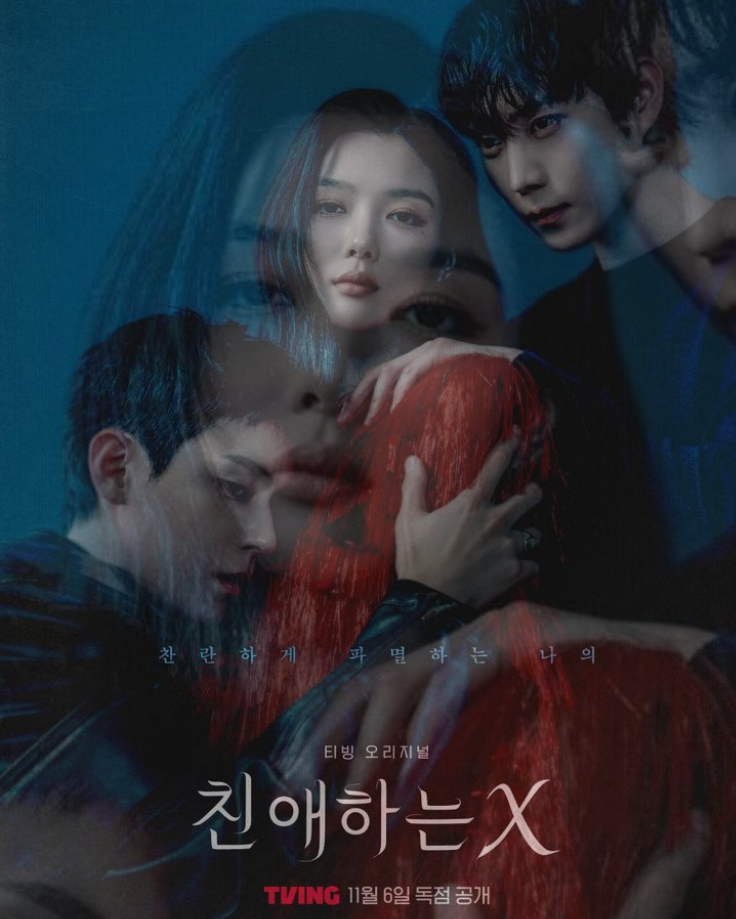
Inside the Mind of Dear X: A Psychological Breakdown of Baek Ah Jin
A psychological and emotional analysis of how Baek Ah Jin became who she was and why her choices were never as simple as they seemed.
Introduction
When I first read Dear X, I thought I had it figured out. I had my opinions. I had my frustrations. I had my “why are you like this” moments. And honestly, I was ready to just write my review and move on. But before I did that, I thought the best way to write the review, was to try to understand the characters psychologically. I started looking a little closer at the characters—trying to understand why they acted the way they did, why certain choices kept repeating, and why everything felt so emotionally messy. And… yeah. That changed me completely.
The more I looked into Baek Ah Jin (played by Kim You Jung), Yun Jun Seo (played by Kim Young Dae), and Kim Jae Oh (played by Kim Do Hoon), the more I realised that none of them are “just toxic” or “just bad” or “just frustrating.” They’re all products of their environments, their trauma, their relationships, and the emotional tools they never learned how to use. So I decided to put all of that research, thinking, overanalysing, and emotional spiraling into these extended character breakdowns. This is for anyone who was just as curious as I was, but didn’t feel like going down a ten-tab research rabbit hole (because honestly… I get it).
One important thing before we dive in: I’m not a psychologist, therapist, or mental health professional. Everything in this analysis is based on personal research, reading, and my own interpretation of the story. I use psychological terms to help explain patterns and behaviours—not to diagnose these characters or present anything as medical fact. This is just me trying to understand them more deeply, make sense of their choices, and share that process with you. I’d also like to mention that I am in no way justifying their actions. Understanding the reason behind certain actions doesn’t justify the actions. People were killed. Lives were ruined. Those facts won’t ever be erased no matter how deep we dive.
Let’s start with Baek Ah Jin.

Table of Contents (because it’s a lot 🤭)
Introduction: A Survivor, Not a Villain
Part I — Baek Ah Jin’s Psychological Foundation
- Baek Ah Jin’s Childhood Psychology: Growing Up in Survival Mode
- Baek Ah Jin’s Adulthood Psychology: Living Inside the Victim Mindset
Part II — Choi Jung Ho and the Psychology of Survival
- Choi Jung Ho and the Logic Behind Her Father’s Death
- Control Through Vulnerability: Fake Injuries, Beanies, and Survival Tactics
- Grief, Control, and the Night Everything Ended
- The Final Goodbye: When Forgiveness Becomes a Threat
Part III — Heo In Gang, His Grandmother, and Ah Jin’s First and Last Experience of Care
Part IIV — Jae Oh vs Jun Seo: Differently Placed, Both Used
Part V — What If?
Final Thoughts: Survival Isn’t the Same as Healing
Introduction: A Survivor, Not a Villain
In Dear X, Baek Ah Jin is often reduced to simple labels: manipulative, cold, selfish, cruel. She lies. She uses people. She destroys lives and walks away. From the outside, it’s easy to see her as the antagonist of her own story—someone who chooses power over empathy and control over connection.
But that reading is incomplete.
Ah Jin is not driven by greed, vanity, or malice in the traditional sense. She is driven by fear. By hypervigilance. By a nervous system that learned early on that safety is temporary and that dependence is dangerous. Every major decision she makes is filtered through one question: “Will this keep me alive?”
And for most of her life, the answer is never “trust,” “wait,” or “hope.”
It is “control.”
This essay isn’t about excusing her actions. The harm she causes is real. People suffer because of her choices. Some of that damage is irreversible. But understanding her psychology means looking beyond what she did and asking why her mind learned to function this way in the first place.
Ah Jin didn’t grow up learning how to love safely.
She grew up learning how to survive efficiently.
She learned that adults are unstable. That affection comes with conditions. That vulnerability invites punishment. That staying emotionally detached is safer than being sincere. Over time, these lessons didn’t just influence her behaviour—they became her identity.
So when she manipulates Jung Ho, destroys In Gang emotionally, uses Jae Oh as an extension of her will, and keeps Jun Seo at arm’s length, she isn’t acting randomly. She is following a system that once saved her life.
This analysis is a deep dive into that system.
Into how abuse shaped her worldview. How trauma trained her instincts. How control replaced attachment. And how survival, when it becomes your only skill, slowly erases your ability to live.
Baek Ah Jin is not a story about evil. She is a story about what happens when someone survives everything except intimacy.
Part I — Baek Ah Jin’s Psychological Foundation
Baek Ah Jin’s Childhood Psychology: Growing Up in Survival Mode
Baek Ah Jin is a character who lives almost entirely in survival mode, and that instinct doesn’t come from nowhere. It’s something that was carved into her from childhood. From a young age, she experienced constant instability: physical abuse, emotional neglect, repeated threats of abandonment, exposure to sexual exploitation, and caregivers who were supposed to protect her but instead became sources of danger. On top of that, she witnessed extreme violence within her own family. None of this happened once and passed. It was ongoing. It was her normal. And growing up in that kind of environment fundamentally changes the way a person learns to exist in the world.
When trauma is that constant and that early, it doesn’t just hurt emotionally, it reshapes how someone thinks, reacts, and connects. Ah Jin learns very young that people aren’t safe. That vulnerability is dangerous. That depending on anyone is a risk. So instead, she learns to read others as potential threats or tools. She learns that control is protection. That manipulation is safer than honesty. That emotions are liabilities. These aren’t “bad personality traits.” They are survival skills she picked up in a world that never gave her anything softer to hold onto.
One of the clearest examples of this is the moment when she walks away after witnessing her mother’s death. On the surface, it can look like coldness or lack of empathy. But psychologically, it reads much more like dissociation — a trauma response where the mind shuts down emotionally to survive something unbearable. When a child is confronted with that level of horror and has no support system to process it, detachment becomes a shield. It’s not that she doesn’t feel. It’s that feeling everything at once would destroy her.
Because of this, Ah Jin grows up emotionally numb in some ways and hyper-aware in others. She’s constantly scanning for danger, constantly trying to stay one step ahead. Her attachment to people becomes disorganised and unstable — wanting closeness, but fearing it at the same time. Her manipulation isn’t proof that she’s incapable of change. It’s proof that no one ever taught her how to live without armour. She wasn’t raised in a world where kindness was reliable. She was raised in one where control meant survival.
Baek Ah Jin’s Adulthood Psychology: Living Inside the Victim Mindset
Before looking at how Ah Jin’s mindset shapes her actions, there’s one accusation that comes up again and again: that she “plays the victim.” And in a surface-level sense, people aren’t entirely wrong. She hurts others, makes harmful choices, and then frames herself as someone who was wronged by the world. But psychologically, what’s happening is more complicated than simple dishonesty.
For Ah Jin, events aren’t processed as “I chose this.” They’re processed as “This was unavoidable.” “I had no other option.” “The world forced my hand.” That isn’t performative victimhood meant to gain sympathy. It’s a survival logic she developed to live with herself. When you grow up constantly powerless, constantly reacting to danger, you learn to believe that agency is an illusion. Things happen to you. You adapt. You endure. You don’t get to choose.
So Ah Jin doesn’t pretend to be a victim. She genuinely experiences herself as one. Her identity is built around the idea that the world is cruel, that weakness is punished, and that survival requires harshness. In her mind, suffering is the baseline. It’s always been there. So when consequences arrive later in life, her instinct isn’t reflection. It’s self-justification. “I’ve suffered too.” “I always suffer.” That belief allows her to keep functioning without collapsing under guilt.
It’s not that she doesn’t know she’s caused harm. It’s that fully sitting with that truth would mean confronting the fact that she had choices — and that idea is terrifying to someone who learned early on that choices were never really hers. As we look at her relationships and decisions, this pattern shows up again and again. Ah Jin isn’t avoiding responsibility out of malice. She’s avoiding it because her entire psychological structure was built around endurance, not accountability.
Part II — Choi Jung Ho and the Psychology of Survival
Choi Jung Ho and the Logic Behind Her Father’s Death
One of the most striking things about this drama is how closely Ah Jin’s actions mirror her internal world. Nothing she does exists in isolation. Every manipulation, every calculated move, every moral compromise follows the same survival logic she learned as a child. Her use of Jung Ho in her plan to deal with her father isn’t random or impulsive. It’s disturbingly consistent with the way she’s always been taught to stay alive.
To understand why she chose Jung Ho, we first have to understand what he represented to her. From the beginning, he’s shown to be protective, emotionally invested, and willing to put himself in harm’s way for others. We see this immediately when he chases down the thief. To most people, that reads as kindness. To Ah Jin, it reads as risk. Someone who intervenes, who acts on instinct, who involves himself in other people’s problems, is dangerous to someone who survives through control. He can interfere. He can disrupt her plans. He can make decisions without her consent. And that makes him both useful and unsafe.
This is where the contrast with Heo In Gang’s grandmother becomes important. The grandmother offers warmth without intrusion. She doesn’t take over Ah Jin’s battles. She doesn’t intervene on her behalf. She simply exists as an emotional shelter. Jung Ho is different. He steps in. He acts. He tries to protect. And that means he can be weaponised, even if he never realises it.
From their very first meeting, Ah Jin doesn’t register Jung Ho as “a good person.” She registers him as predictable. When she sees him restraining the thief, she’s watching someone who reacts without hesitation, risks himself for strangers, and operates on principle rather than calculation. To her, that isn’t moral beauty. It’s a lever she can pull. She may not immediately form a detailed plan, but something clicks. She understands, instinctively, that he can be moved in specific ways if she positions herself correctly.
What confirms this for her is realising how rigid his moral code is. Jung Ho is the kind of person who feels responsible for other people’s suffering. He steps in when someone is being hurt. He carries guilt easily. He doesn’t walk away once he believes someone is in danger. That makes him reliable in the worst possible way. Once he commits emotionally, he can’t detach. And to someone like Ah Jin, that predictability is power.
So when the stalker appears, it doesn’t create her plan, it validates it. It proves her theory. If she looks vulnerable enough, he will act. If he believes she’s in danger, he will protect her. If he believes something is wrong, he will sacrifice himself to fix it. And that is exactly what happens. From that point on, she understands that she doesn’t need to force him. She only needs to frame herself correctly.
Underlying all of this is Ah Jin’s core belief: everyone is responsible for their own choices. It’s a belief that protects her from collapsing under guilt. In her mind, Jung Ho isn’t being manipulated. He’s choosing to act. He’s choosing to get involved. He’s choosing to sacrifice himself. And because survival has always outweighed morality in her life, the damage she causes doesn’t stop her. Collateral harm is acceptable if it means she lives. That isn’t cruelty for cruelty’s sake. It’s the logic of someone who was never allowed the luxury of clean choices.
Control Through Vulnerability: Fake Injuries, Beanies, and Survival Tactics
Once Ah Jin understands what appearing weak can do in her relationship with Jung Ho, she leans into it. Hard. The fake injuries aren’t about fishing for sympathy. They’re about control through dependency. By presenting herself as fragile, she keeps Jung Ho emotionally anchored to her without ever having to ask for protection outright. She isn’t saying, “Feel sorry for me.” She’s saying, “Don’t look away. Don’t drift. Don’t leave.” It’s a way of testing loyalty without risking real vulnerability, and ensuring safety without surrendering power.
More importantly, she’s laying emotional groundwork. She may not know exactly when she’ll need Jung Ho to act, but she’s making sure that when the moment comes, the story is already written. In his mind, she is endangered. She is fragile. She is someone who needs defending. That narrative doesn’t form overnight. Ah Jin builds it carefully, piece by piece.
This becomes especially clear when she hurts herself to distract Jung Ho from the coworker who starts noticing inconsistencies. That moment isn’t impulsive. It’s strategic. The coworker represents a threat to the illusion. If Jung Ho hears that Ah Jin isn’t afraid, that she’s observant, calm, or calculating, everything falls apart. He might start seeing her as capable. As someone with agency. As someone who doesn’t need saving. And once that happens, her leverage disappears.
So she redirects his attention with pain. Her injury reasserts her role: helpless, endangered, in need of protection. It anchors his focus back to her body, her vulnerability, her supposed fragility. It isn’t self-pity. It’s narrative maintenance.
When it comes to using Jung Ho against her father, Ah Jin doesn’t begin with a detailed murder plan. She begins with an outcome: someone has to stop him. She knows she can’t kill her father herself. She knows she can’t outrun him forever. She knows the system has never protected her. So once she realises that Jung Ho will intervene, take responsibility, and refuse to retaliate, he becomes the only viable option. The stalker doesn’t change her goal. He teaches her how to activate Jung Ho’s instincts. He shows her exactly which emotional buttons to press.
From there, the plan isn’t about cruelty. It’s about inevitability. If she frames things correctly, Jung Ho will act. And if he acts, the problem will be solved.
This is also why she stays with her father instead of running, even when escape seems possible. From the outside, it looks irrational. From the inside, it’s tragically logical. Abusive relationships create trauma bonds. Familiar danger can feel safer than unknown freedom. Ah Jin has learned that suffering is the cost of staying alive. She believes she’s responsible for managing his violence, for predicting it, for containing it.
Paying him not to hurt her isn’t submission. It’s her version of control. As long as she stays, she knows the rules. She knows the patterns. She believes she can survive. Leaving would mean uncertainty — and for someone whose nervous system is wired around constant threat, uncertainty feels more dangerous than abuse. To her body and mind, predictability is safety.
And then comes the night when all of these survival strategies finally converge.
Grief, Control, and the Night Everything Ended
Before getting to the actual night of her father’s death, there’s one quiet moment that often gets overlooked: the hug. Right before everything unravels, Ah Jin embraces him and breaks down. That scene isn’t forgiveness. It isn’t reconciliation. And it certainly isn’t healthy love. It’s grief for the father she never had. She’s mourning the fantasy of safety, the possibility that he could have been different, and the last remaining tie to her original family. In that moment, she isn’t clinging to the man who abused her. She’s clinging to the idea of a childhood she was denied.
This matters because people often assume that planning someone’s downfall erases emotional attachment. It doesn’t. Abuse doesn’t cancel love, longing, or hope. Victims can orchestrate escape through extreme means and still feel deep grief over what they’re losing. You can decide that someone has to go and still mourn what they represented. Ah Jin’s tears aren’t hypocrisy. They’re evidence of how complicated trauma bonds really are.
When the plan finally unfolds, Ah Jin is doing several things at once. She provokes her father. She frames him as an immediate threat. And she activates Jung Ho’s protector instincts. The situation is carefully engineered so that violence becomes inevitable, she doesn’t have to strike the blow herself, and the responsibility is transferred to someone else. She creates a scenario where survival is possible without direct confrontation.
What’s important here is that this isn’t an emotional outburst. It’s instrumental violence. Harm is a means to an end, not a loss of control. The goal is simple: remove the threat and stay alive. The method is cold, calculated, and shaped by years of abuse. It isn’t sadism. It’s survival logic taken to its most extreme conclusion.
And then comes the moment that unsettles viewers the most: her laughter.
On the surface, it can look cruel. Triumphant. Unhinged. But psychologically, it reads very differently. In that moment, years of constant fear end in seconds. Her body, which has lived in a state of hypervigilance for most of her life, finally receives the signal that the danger is over. The threat is gone. He can’t hurt her anymore. And her nervous system doesn’t know how to process that.
When people come out of prolonged trauma, their bodies often release tension in strange, uncontrollable ways: laughter, shaking, sobbing, dissociation, hysteria. Ah Jin’s laugh isn’t planned. It isn’t celebratory. It isn’t even fully conscious. It’s terror, relief, and disbelief colliding all at once. It’s the shock of realising, “It actually worked. I survived.”
So that scene isn’t about victory. It’s about escape. It’s the sound of someone whose body is finally standing down after years of being on high alert. The saddest part of it isn’t that she laughs. It’s that she laughs because surviving felt impossible for so long that safety now feels unreal.
And none of this cancels out the trauma of what she’s just been through. The fact that her father’s death was planned doesn’t mean it wasn’t devastating. Premeditation doesn’t erase psychological damage. It just means the damage arrived in a different form.
The Final Goodbye: When Forgiveness Becomes a Threat
When Jung Ho returns after prison and begins hovering around her life again, Ah Jin’s first assumption isn’t relief. It’s fear. She immediately believes he’s come back for revenge. And in her mind, that makes perfect sense. Retaliation, leverage, delayed payback — those are the rules she understands. Those are the strategies she’s lived by. If their roles were reversed, that’s likely what she would have done. Revenge would have fit the world she knows.
What she isn’t prepared for is Jung Ho choosing peace.
His refusal to hate her destabilises her more than anger ever could. Forgiveness feels suspicious to someone who has survived through control and calculation. It removes the structure she’s relied on her entire life. If he were cruel to her, she’d know how to respond. If he tried to hurt her, she’d know how to defend herself. But kindness with no conditions leaves her exposed. In a twisted way, revenge would have been easier to survive.
What truly unravels her, though, is what he says: “If you’d had even one caring adult, you wouldn’t have turned out this way.” In a single sentence, Jung Ho does two things at once. He absolves her of full moral condemnation, and he reframes her entire identity. He tells her that she isn’t inherently broken or evil. That she was shaped by neglect. That her life could have looked different.
And Ah Jin can’t accept either part of that.
If she accepts his words, she has to face her guilt honestly. She has to acknowledge the damage she caused. And worse, she has to grieve the version of herself that never got a chance to exist — the girl she might have been if someone had protected her. That kind of grief is heavier than anger. It threatens to collapse everything she’s built to survive.
So she reframes him instead.
By scoffing and telling him that he “missed his chance at revenge,” she reasserts control. She turns mercy into weakness. She reduces his compassion to foolishness. It’s not that she doesn’t understand what he’s offering. It’s that understanding it would shatter her defenses. It would force her to step into emotional territory she has never learned how to navigate.
In the end, Ah Jin manipulates Jung Ho because she has learned to see people by function rather than by feeling. She survives through pattern recognition. She believes safety must be extracted, negotiated, or engineered — never freely given. Trust, to her, has always been dangerous.
Jung Ho is kind, principled, and self-sacrificing. By simply being a good man, he becomes the first adult who proves both how right and how tragic her instincts were. Right, because his predictability made him easy to use. Tragic, because he was also the one person who might have shown her another way to live.
Part III — Heo In Gang, His Grandmother, and Ah Jin’s First and Last Experience of Care
Ah Jin: Her First and Last Time Caring
One of the most pivotal shifts in the entire drama happens when Heo In Gang and his grandmother enter Ah Jin’s life. At first, it’s easy to miss the emotional significance of this arc, especially given how cruel Ah Jin later becomes. But this relationship marks the closest she ever comes to genuine attachment — and understanding it is key to understanding everything that follows.
The foundation of this shift is her relationship with the grandmother. She represents something Ah Jin has never known: a caregiver who is kind without conditions. Someone who doesn’t want to use her. Someone who isn’t volatile, manipulative, or dangerous. Someone who offers warmth without demanding emotional exposure in return. There are no hidden expectations, no power games, no threats disguised as love. For the first time, Ah Jin experiences care that isn’t transactional.
And that kind of presence can slip through even the strongest emotional armour.
We know Ah Jin truly cares because she allows the grandmother close to her in ways she rarely allows anyone. She stays near her. She lets herself be observed. She doesn’t perform. She doesn’t manipulate. And most importantly, she prays for her when she’s hospitalised. That moment matters. You don’t pray for someone you feel nothing for. You pray when you’re terrified of losing something you can’t replace. That alone dismantles the idea that Ah Jin is emotionally hollow. She feels deeply. She just isn’t practiced at showing it.
Then she loses her.
Ah Jin doesn’t just experience another loss. She witnesses another sudden, violent death. She loses the only safe adult figure she has ever known. And she is forced to relive the core trauma of her childhood all over again. Her nervous system doesn’t register this as sadness. It registers it as danger. As proof that attachment leads to devastation. As confirmation that closeness is unsafe.
With that in mind, her breakup with In Gang begins to make painful sense.
Internally, several things are happening at once. First, emotional overload. Ah Jin is grieving, but she has no tools to process grief. She’s never been taught how to sit with pain without turning it into strategy. So her system defaults to what it knows: shut down, detach, regain control. Ending the relationship becomes a way to stop feeling.
Second, attachment panic. By this point, In Gang isn’t just a boyfriend. He’s tied to the grandmother. He’s a living reminder of loss. He’s someone who could leave, break down, or need emotional support from her. To Ah Jin’s trauma-shaped mind, deep attachment equals imminent danger. So she destroys the bond before it can destroy her.
Finally, control as self-preservation. Ah Jin originally planned to be with In Gang for only one year. The fact that she doesn’t stick to that plan tells us everything. She became emotionally invested in ways she never intended. And when things move off-script, people who rely on control to feel safe tend to react by becoming rigid and extreme. They reassert dominance over the situation to stabilise themselves.
That breakup isn’t just rejection. It’s self-protection through emotional demolition.
Then comes the question: “Why did she attend the grandmother’s funeral but not In Gang’s?”
The reason is that the grandmother’s funeral was safe for Ah Jin. Psychologically, it allowed her to perform socially acceptable grief. She could position herself as a “good, pitiful person.” She could mourn without being implicated. The grandmother’s death wasn’t caused by Ah Jin, so there was no moral risk. She could cry without consequence. In trauma terms, it was low self-threat and high social clarity.
In Gang, on the other hand, existed in a completely different category in her psyche. She didn’t kill him. But she used him. And she knows it. Funerals force meaning. They ask: Who were you to the deceased? What did you give? What did you take? Ah Jin wouldn’t have been able to answer those questions without confronting herself.
We assume she didn’t go because she didn’t care. Psychologically, the opposite is more plausible. She didn’t go because seeing his body would collapse her defenses, because being seen by others would expose her role, and because she could no longer hide behind usefulness.
In Gang loved her in a way that asked for nothing in return. That made his death unbearably destabilising to someone who survived through transaction. Ah Jin wasn’t experiencing clean guilt—“I did something wrong.” She was experiencing shame—“I am something wrong.” His funeral would have forced her to face the purity of his devotion, the imbalance of what she took, and the fact that he died believing in her. That kind of shame doesn’t lead to repair. It leads to hiding. So she disappeared.
She was also dealing with moral injury—the kind of rupture that happens when someone violates their own internal code in a way they can’t integrate. What does that mean? It means Ah Jin didn’t just end the relationship. She dehumanised him on purpose. Everything she said was designed to erase the meaning of the year they shared, to strip him of dignity, and to make his love feel pathetic instead of real. That wasn’t neutral cruelty. It was strategic annihilation of intimacy.
And then he died.
Even if she intellectually knew depression was complex, her nervous system didn’t care about nuance. To her body and her psyche: “I was the last person he reached for. And I crushed him.”
Breakups happen. People survive them. What made this unbearable was that she was one of his last emotional contacts. She rewrote his reality in their final interaction. She framed his love as embarrassing and selfish. That kind of rejection doesn’t just hurt. It undoes meaning.
When he said that year was one of the best of his life and she treated it like nothing, she wasn’t just leaving him. She was telling him his joy was a delusion. For someone already fragile, that was devastating. And she knew it.
If she had attended the funeral, she would have been forced to hold two truths at once: “He chose to die for reasons bigger than me.” “But I was the last person to make him feel worthless.” That collision is psychologically lethal for someone who survives through emotional compartmentalisation.
She left thinking she had protected herself. He left believing that the best year of his life meant nothing.
And then he was gone.
That’s not something you grieve openly. It’s something you avoid, bury, and let rot inside you.
What made everything worse was the timing. A week or so after the grandmother’s funeral meant her emotional reserves were already depleted. Her mask was cracked. The violence around her had escalated. She wouldn’t have been able to emotionally regulate enough to attend something that would have stripped her bare.
All of that is to say: she didn’t skip the funeral because she didn’t care. She skipped it because caring would have destroyed the version of herself she needed in order to survive. And Ah Jin always chose survival first.
The Bathtub Scene: Her Final Goodbye
When she went to his apartment and called him weak, there was far more happening than simple cruelty. That statement served multiple coping functions at once.
First, there was defensive dehumanisation. By framing him as “weak,” she didn’t have to feel guilt, acknowledge her impact, or confront her own grief and attachment. It created emotional distance where closeness would have been unbearable.
Then there was projection. People with trauma often despise vulnerability because it was punished in them. When Ah Jin called him weak, she may have been reflecting her hatred of weakness in herself and her terror of becoming emotionally like him.
There was also defensive moral distancing. For someone like Ah Jin, whose core belief is “the world is cruel and survival requires hardness,” suicide directly threatens her internal logic. If she allowed herself to see his death as understandable, she would have had to confront two unbearable truths at once: that his pain was valid, and that her actions contributed to it. Calling him weak wasn’t about him. It was about protecting herself from collapsing under guilt. In trauma psychology, this is called splitting—turning someone into “wrong” or “weak” so the person doesn’t have to absorb blame that would feel annihilating.
Then we reach the moment when she cries and says, “Please understand.”
Her numbing tears tell us that she does understand and that is exactly what hurts. She wasn’t asking In Gang to justify his death. She was asking him to understand her. To understand that she used him, that she didn’t know how to love safely, and that she didn’t mean to destroy him.
Since she couldn’t say any of that out loud—because admitting it would have meant acknowledging responsibility in a way she had never been allowed to do without punishment—she compressed everything into the only language she had left.
What made the bathtub scene so important was that it wasn’t a public space. There was no audience, no power exchange, and no strategy. For once, she was left alone with the consequences of a relationship she entered knowing it was transactional, but accidentally made real.
She didn’t love In Gang the way he loved her, but she did care. And that contradiction was unbearable for someone who believed that care always came with a price. She didn’t say, “I’m sorry. I hurt you. I shouldn’t have used you,” not because she didn’t feel it, but because saying it would have meant admitting that survival alone wasn’t morally neutral. It would mean facing a world where surviving still made you responsible, and she wasn’t ready for that.
Her downfall begins to accelerate after this, because In Gang’s death proved something terrible: that her presence was destructive even when she didn’t intend harm.
Part IIV — Jae Oh vs Jun Seo: Differently Placed, Both Used
Jae Oh vs Jun Seo: Differently Placed, Both Used
Ah Jin definitely didn’t love Jun Seo nor Jae Oh in a healthy sense, but she did position them very differently in her internal world. Let’s look at Jun Seo first.
Jun Seo was the emotional weight she couldn’t escape. He knew her history, knew her worst moments, represented her past, and carried moral tension. Being around him forced Ah Jin to feel seen.
So if that was the case, why didn’t she fully cut him off?
Because Jun Seo was her origin witness. He saw her as a child, saw the abuse, saw her survive, and knew who she was before the mask. Cutting him off completely would have meant erasing her past, admitting she wasn’t that person anymore, and accepting that she had destroyed the one person who knew her truth.
So instead, she kept him at arm’s length. Not close, but not gone. And before you ask—no, it wasn’t attachment. It was containment.
Now let’s look at why she felt closer to Jae Oh, even if she “cared” less.
Jae Oh was the functional extension of her will. He was predictable. He didn’t demand emotional clarity, he didn’t moralise her actions, mirror her trauma back at her, or force her to confront herself. He just acted. And to Ah Jin, that was relief.
Being around Jae Oh allowed her to feel effective. On top of that, he didn’t ask why. He didn’t hesitate, push back, or need reassurance. From her standpoint, Jae Oh was a tool that wouldn’t malfunction, wouldn’t collapse emotionally, and whose self-worth was aligned with her needs. That made him invaluable.
What’s important to understand is that she never truly respected either of them. She resented Jun Seo for having a moral line and exploited Jae Oh for not having one. Jun Seo reminded her that she wasn’t all-powerful, while Jae Oh confirmed that she was.
Neither was love. Both were mirrors.
The tragic irony is that Jun Seo was the one who truly saw Ah Jin but wouldn’t destroy himself for her, while Jae Oh was willing to destroy himself for her but never truly saw her.
To end this section, here’s the final framing of the trio from her perspective:
Jun Seo represented the last moral boundary she couldn’t break.
Jae Oh represented the consequences of breaking all boundaries.
Part V: But What If?
To end Baek Ah Jin’s psychological breakdown, we have to answer the question that always lingers: What if her childhood had been different?
What if Ah Jin had gone to an orphanage instead of Jun Seo’s house?
Growing up in Jun Seo’s home gave her access to power, early awareness of leverage, and emotional detachment as a survival tool. She learned how to read adults, how to anticipate danger, and how to stay one step ahead by controlling perception. Her environment didn’t teach her safety, it taught her strategy.
If she had gone to an orphanage instead, the lessons would have been different, but not necessarily healthier. She would have learned invisibility instead of manipulation. Emotional self-sufficiency instead of emotional control. Quiet endurance instead of calculated dominance. In many cases, institutional environments teach children that attention is scarce, affection is conditional, and survival means blending in or outperforming others. She still would have learned that love was unreliable and that protection had to come from herself.
In that version of her life, she may not have become as overtly strategic or socially powerful. She might have been more withdrawn, more self-contained, and less confrontational. But the core traits—distrust, hyper-independence, emotional guardedness, and the belief that vulnerability is dangerous—would still be there. The expression would change. The damage would not.
Because trauma doesn’t disappear when the setting changes. It adapts.
What shaped Ah Jin most wasn’t the specific location of her upbringing, but the absence of consistent safety. No adult stayed. No one protected her without cost. No one taught her that she was allowed to exist without earning it. Whether in a wealthy home or an underfunded orphanage, that absence would have still carved itself into her nervous system.
So the question isn’t “Would she have been different?”
It’s “Would she have been broken in a different way?”
And the honest answer is: yes. But broken all the same.
Final Thoughts: Survival Isn’t the Same as Healing
Baek Ah Jin was never written to be a villain in the simple sense. She was written as a case study in what happens when survival becomes someone’s entire personality.
Every major choice she makes—manipulating Jung Ho, using In Gang, controlling Jae Oh, keeping Jun Seo at a distance, orchestrating her father’s death—comes from the same internal logic: Stay alive. Stay in control. Don’t need anyone too much.
That logic worked. It kept her alive. It made her powerful. It made her untouchable.
But it also hollowed her out.
She learned how to extract safety, not how to receive it.
She learned how to manage people, not how to trust them.
She learned how to endure pain, not how to process it.
So by the time genuine care entered her life—through the grandmother, through In Gang, through Jung Ho—she didn’t know what to do with it. It didn’t fit into her system. It threatened the rules she had lived by. And anything that threatened those rules had to be destroyed or rejected.
And that’s what makes this so true:
She wasn’t incapable of caring.
She was incapable of feeling safe while caring.
The tragedy of Baek Ah Jin is not that she was doomed from birth, it’s that she adapted so well to cruelty that she never learned how to live without it.
Her intelligence saved her. Her resilience saved her. Her control saved her. And in the end, those same traits destroyed her relationships, her morality, and her chance at peace.
She became brilliant at surviving a world that no longer existed.
And she never learned how to stop.
So what did you think? Can you believe how complex it all really was? It was so fun doing a deep dive that I just had to go the extra mile. I know I already did a review on Dear X as a whole (review here), but the characters were just too complex. Since I wasn’t able to get all of their information to fit in the Dear X review, I decided to make Baek Ah Jin, Yun Jun Seo, and Kim Jae Oh, their own character analysis page.
Next week, I’ll be posting a bullet point version of this analysis for those who want something a little simpler. Next week I will also post Yun Jun Seo’s analysis followed by Kim Jae Oh in the following week.
Unfortunately after I release these analysis’ I will be taking a break from posting. I still love the blog and posting reviews but with this new job I have, it’s taken up a lot of my blogging time. I’ll definitely be back but I wanted to give you a heads up.
My posts may be a bit sporadic for a while and definitely won’t be every Friday like I’ve been able to do in the past. I hope you all understand and I can’t wait to get back into the flow of things.
See you next time! 💕


